
Personal loans
Customized financing to consolidate high-interest debt and unlock financial flexibility.
About BHG
Programs
401(k) Loan Rules: What To Know Before Borrowing
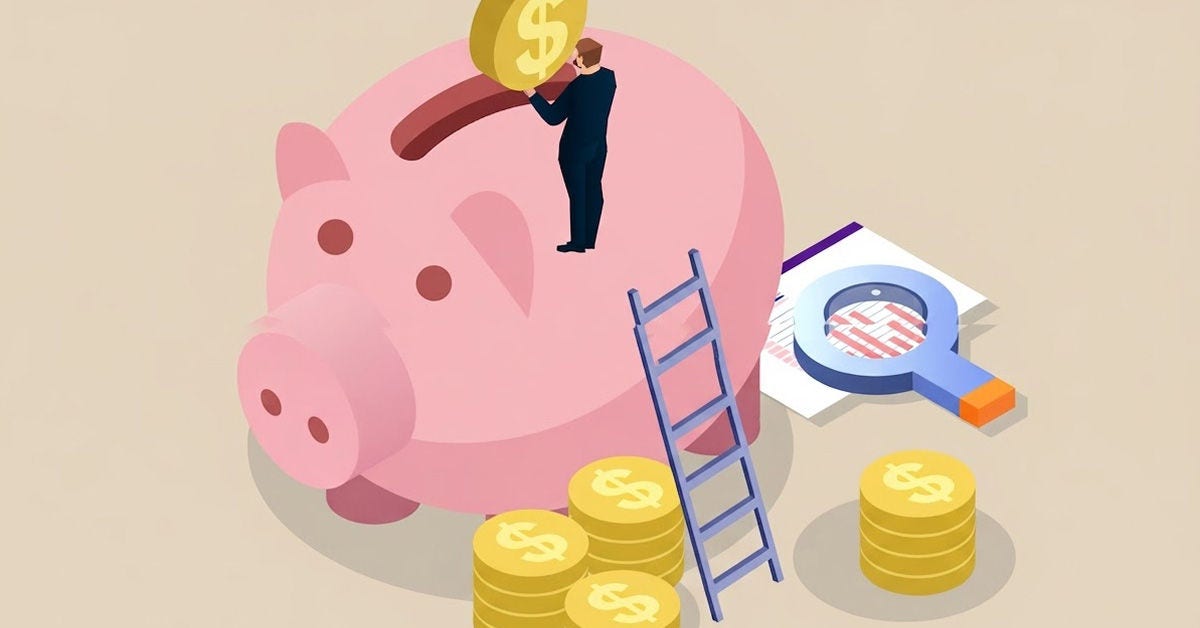
A high income can provide more financial flexibility, but it does not eliminate cash flow challenges. When an unexpected expense arises or you need access to significant funds, borrowing from your 401(k) may seem like a convenient solution. However, 401(k) loan rules can be complicated. Borrowing limits, repayment requirements, job changes, and missed payments can all affect the cost of the loan.
We'll discuss what you need to know, including how 401(k) loans work, what the IRS requires, and what happens if you leave your job. You’ll also learn why a personal loan may be a smarter option that doesn’t put your long-term retirement savings at risk.
Key takeaway
- If your 401(k) supports loans, you can usually borrow up to $50,000 or half of your vested account balance, whichever is less.
- You'll make equal payments of principal and interest, often over five years through payroll deductions. However, defaulting on payments or leaving your job can trigger taxes and penalties, making alternatives worth exploring.
- A personal loan may provide the liquidity you need without reducing the amount invested in your retirement account or tying repayment to your job. For qualified borrowers, BHG Financial offers access to large unsecured loan amounts1 and extended repayment terms.
What is a 401(k) loan?
When you take out a 401(k) loan, you borrow money from your retirement savings. You repay the borrowed amount and interest back into your plan, typically through paycheck deductions. Unlike a traditional bank loan, there's no credit check impacting your credit score. The funds come directly from your vested account balance.
If you repay the 401(k) loan on time and in full according to your plan's terms, you won’t owe taxes or penalties. Because the borrowed funds are repaid to your account, 401(k) loans differ from withdrawals, which permanently remove money from your retirement savings. The latter permanently removes money from your account and triggers immediate tax consequences.
While not every employer plan allows loans, Experian notes that nearly 80% do. Check your plan documents or ask your plan administrator to determine whether you can borrow from your 401(k) and under what conditions.
Give your financial plans more room to grow
Explore loan options designed to support big goals
Which 401(k) loan rules apply?
The IRS sets some basic guidelines for 401(k) plan loans, but your plan administrator determines the specifics.
Maximum loan amount
Based on the IRS rules, the most you can borrow is the lesser of $50,000 or 50% of your vested account balance. "Vested" is the key word here. While your own contributions are always 100% vested, employer contributions (matches or profit sharing) may vest on a schedule. If it’s not fully vested, it won’t count toward your borrowable balance.
However, the IRS provides one exception for lower-balance accounts: if 50% of your vested balance is less than $10,000, your plan may let you borrow up to $10,000. This exception is optional, so you’ll need to confirm that your plan allows it.
Note that the $50,000 cap applies across all outstanding loans from the same employer plans, not per loan. So, if you have two 401(k) loans totaling $40,000, you could only borrow another $10,000, regardless of your account balance.
The 12-month lookback rule
If you've borrowed from your 401(k) before, the IRS requires lowering the total cap to the lesser of:
- $50,000 less the difference between the highest outstanding loan balance you carried in the prior 12 months and your current outstanding balance
- Half of your vested account balance or $10,000, whichever is greater
Designed to prevent paying off a loan and immediately re-borrowing the full $50,000, these rules catch many borrowers off guard. Even after paying off a loan, the lookback window can significantly reduce what's available for a new one.
Example: Say your vested balance is $120,000 ($60,000 if halved). Your maximum would normally be $50,000. But if your highest loan balance in the past 12 months was $30,000 and you currently owe $10,000, your new cap is $50,000 minus ($30,000 - $10,000), which equals $30,000. That means you can borrow up to $20,000 more.
Potentially stricter plan-level rules
Since the IRS rules only set the ceiling, your plan rules may impose:
- Minimum loan amounts: Many plans require a minimum of $1,000 or more to discourage borrowers from treating 401(k) loans like revolving credit.
- Maximum number of outstanding loans: Some plans allow only one active loan at a time, limiting flexibility for borrowing needs.
- Loan purpose restrictions: Some plans mainly allow 401(k) loans for legitimate hardships and require documentation for home purchase loans.
- Cooling-off periods: You might have a waiting period between loans, which decreases a 401(k) loan’s value for addressing recurring liquidity issues.
Maximize your cash flow
Explore fixed-payment personal loan options
401(k) loan vs. 401(k) withdrawal
A 401(k) withdrawal offers some benefits, such as no IRS limits or a requirement to repay the amount plus interest. Plus, like a 401(k) loan, there’s no credit check. However, there are several risks and costs to consider.
If you're younger than 59½, the IRS generally treats a 401(k) withdrawal as an early distribution, subject to ordinary income taxes (10% to 37%) plus a 10% federal penalty. For example, if you're in the 37% federal bracket, a $50,000 early withdrawal could leave you with a tax bill of $23,500, and that’s before state taxes.
There are IRS hardship exceptions that waive the 10% penalty, such as:
- Unreimbursed medical expenses exceeding 7.5% of your adjusted gross income
- Permanent disability or terminal illness
- Substantially equal periodic payments (SEPP/72(t) distributions)
- Separation from service at age 55 or older (for qualified plans)
- Qualified domestic relations orders (QDROs)
Even with a qualifying exception, the distribution is still taxable income. Also, hardship withdrawals are permanent, meaning the money won’t go back into your retirement account to compound over the years.
|
|
401(k) loan |
Early withdrawal (under 59½) |
|---|---|---|
|
Taxes on amount taken |
None if repaid per plan terms |
Ordinary income tax |
|
10% early withdrawal penalty |
None if repaid |
Generally applies (exceptions exist) |
|
Repayment required |
Yes |
No |
|
Impact on retirement savings |
Temporary (if repaid) |
Permanent |
|
Credit check |
No |
No |
|
Effect on compounding |
Reduced while funds are out |
Permanent loss of compounding |
|
Maximum amount |
Lesser of $50,000 or 50% vested |
No IRS cap (subject to account balance) |
How do you repay a 401(k) loan?
Understanding 401(k) repayment is important for preparing your budget. You’ll usually have five years where you make equal payments of principal and interest. Payments are made at least quarterly, usually automatically out of your paycheck.
You can generally make extra principal payments to reduce the total interest. However, ask your plan administrator whether they’re allowed and how they’re processed.
An exception to the five-year rule is for 401(k) loans used to purchase your primary residence. If your plan allows this exception, you may qualify for a longer repayment term, but you’ll typically need to provide documentation.
What happens if you miss a payment?
If you miss a payment, your plan may provide a cure period, typically through the end of the calendar quarter following the quarter when you missed the payment. If you make up the missed payment within that window, the loan remains in good standing.
Otherwise, the IRS treats the full remaining balance as a taxable distribution, potentially with the added 10% early withdrawal penalty if you're under 59½. However, your plan terms may require you to still repay the loan; if so, those payments might help reduce taxes on future 401(k) withdrawals.
What happens if you lose your job?
A 401(k) loan is genuinely risky for those who may not expect a job change. When you separate from your employer—voluntarily or not—your remaining loan balance typically becomes due. Many plans require full repayment within 60 to 90 days of separation, though the deadline, terms, and any grace period may vary by plan.
If you can't repay in full, the outstanding balance may be treated as a plan loan offset. This is a taxable distribution that might also involve a 10% early withdrawal penalty.
However, you may be able to avoid immediate taxes on the outstanding amount if you roll it over to an eligible retirement plan before your federal income tax return is due.
Why a personal loan can be better than a 401(k) loan
If you're a professional who needs significant funds ($20,000 to $250,000), a personal loan compared to a 401(k) loan often provides more financial control with fewer long-term consequences.
Preserved retirement compounding
The most direct advantage of a personal loan is that your retirement account stays fully invested. Every dollar stays in the market, compounding on your behalf. For high earners in their peak earning years, protecting that growth is one of the most valuable financial moves.
No job-change risk
A personal loan has fixed repayment terms that don't change based on your employment status. If you leave your job, there's no risk of a forced distribution, tax consequences, or scramble to repay a large balance within a few months.
Predictable, fixed payments
Personal loans carry fixed interest rates and fixed monthly payments for the life of the loan. You know exactly what you owe each month, which supports cash flow planning. If you have fluctuating income or variable expenses, this predictability is especially valuable for your budget.
You’ll also know your total interest costs upfront, and market changes won’t affect your loan. And if you choose a loan provider (like BHG Financial) that doesn’t charge prepayment penalties, you can make extra principal payments to save on interest without concerns about added costs.
Get a personal loan without the restrictions of a 401(k) loan through BHG Financial
Personal loans through BHG Financial are built for high earners seeking meaningful borrowing power without tapping the retirement accounts they worked hard to build.
From debt consolidation loans to home improvement to additional financial flexibility, you can access amounts up to $250,000,1 flexible terms from two to 10 years,1,2 and fixed rates starting at 6.49% APR.1
Through BHG Financial, you can explore options that keep your retirement strategy intact, with no collateral required, no application fee to check your rate, and no impact on your credit score to prequalify.3
Ready to learn more? Request a personalized estimate in seconds,4 and see whether BHG Financial is the smarter alternative for your borrowing needs.
See your offer † real fast
Just a few easy steps to get prequalified!
† This is not a guaranteed offer of credit and is subject to credit approval.
401(k) loan FAQ
What are the current 401(k) loan rules for how much you can borrow?
The IRS puts a cap on 401(k) loans: the lesser of $50,000 or 50% of your vested account balance. Your own contributions are always 100% vested, but employer contributions may vest on a schedule over several years. If your employer's match or profit-sharing contributions aren’t fully vested, they don’t count toward your borrowable balance.
What are the 401(k) loan repayment rules?
Generally, you must repay 401(k) loans within five years through equal payments of principal and interest made at least quarterly. Most plans structure this as automatic payroll deductions, which simplifies the process but also means repayments come from after-tax dollars. However, plan rules can vary, so check yours first.
What happens to my 401(k) loan if my account balance goes down?
Once a loan is issued, the amount owed doesn't change based on market performance. However, if your account value drops significantly, the loan represents a larger percentage of your remaining balance. This matters if you need to borrow again, as the 50% cap applies to your current vested balance at the time of the new loan request.
Do you really "pay yourself back" with a 401(k) loan?
You do pay interest back into your own account, which is the basis of the "paying yourself back" framing. But this description leaves out some genuine costs. Since loan repayments aren't contributions, they don't count toward your annual limit or generate an employer match. Also, the borrowed funds are out of the market during the repayment period, meaning you miss out on compounding returns.
This article has been prepared for informational purposes only, and is not intended to provide, and should not be relied on for tax, legal or accounting advice. You should consult your own tax, legal and accounting advisers before taking any action(s).
Not all solutions, loan amounts, rates or terms are available in all states.
1 Terms subject to credit approval upon completion of an application. Loan sizes, interest rates, and loan terms vary based on the applicant's credit profile. Not all applicants will qualify for the lowest rate.
2 Personal Loan Repayment Example: A $60,000 personal loan with a 7-year term and an APR of 17.06% would require 84 monthly payments of $1,191.38.
3 There is no impact on your credit for applying. For personal loans, a complete credit history, which will appear as an inquiry on your credit report, will be performed upon acceptance and funding of the loan and may impact your credit.
4 This is not a guaranteed offer of credit and is subject to credit approval.
Consumer loans funded by Pinnacle Bank, a Tennessee bank, or County Bank. Equal Housing Lenders. 
For California Residents: Personal loans made or arranged pursuant to a California Financing Law license - Number 603G493.

Bankers Healthcare Group, LLC d/b/a BHG Financial NMLS ID# 2040829