
Personal loans
Customized financing to consolidate high-interest debt and unlock financial flexibility.
About BHG
Programs
Balance Transfer vs. Debt Consolidation Loan: Pros, Cons, and Costs Compared
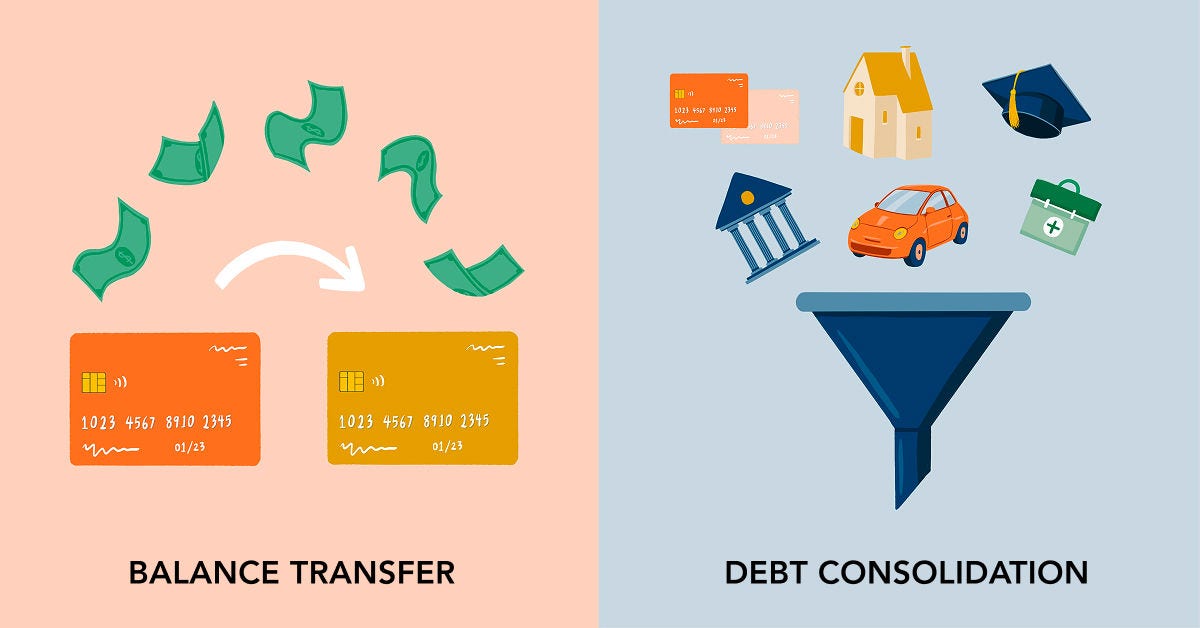
For high-earning professionals, carrying multiple debts is common. Credit cards, personal loans, and unplanned expenses have a way of stacking up—along with the payments, due dates, and interest rates that come with them.
Balance transfers and debt consolidation loans can reduce the hassle and frustration that come with juggling payments while lowering the overall cost of your debt.
Choosing the right solution depends on a few factors, including your balance size, debt type, and the level of structure you want in your repayment plan.
Below, we’ll explain how balance transfers and debt consolidation loans differ and how to determine which one best fits your needs.
Key TAKEAWAYs
- Balance transfers move existing credit card debt to a new card with a low or 0% introductory APR. They work best for low balances you can pay off within the introductory period, which is typically six to 18 months.
- Debt consolidation loans pay off multiple balances at once with a fixed-rate personal loan. They're a stronger fit when you're juggling larger or mixed debt across multiple accounts and want a structured repayment plan.
What is a balance transfer?
A balance transfer is the process of moving existing credit card debt to a new card with a low or 0% introductory APR. The goal is to use the promotional window (typically six to 18 months) to make interest-free payments.
Unlike a loan, there’s no cash payout with balance transfers—the new card's credit limit is used to cover your transferred balances. You may pay a one-time transfer fee of 3% to 5% of the amount moved, but some credit cards waive those fees.
Keep in mind that any remaining balance at the end of the promotional period will typically revert to the card's standard variable APR, which can exceed 20%.
You need good to excellent credit to get approved for a balance transfer, and this solution works best for credit card debts you can pay off by the end of the promotional period.
What is a debt consolidation loan?
A debt consolidation loan is a fixed-rate personal loan used to pay off multiple balances at once. You receive a lump-sum payout—or have it sent directly to your creditors—to settle your existing debts. Then, you make one monthly payment on the new loan until it’s fully repaid. The advantage of this solution is that you get structured monthly payments at a fixed APR for a defined period.
Some consolidation loans are secured, but many are unsecured. While it varies by lender, you may be charged an origination fee of 1% to 10% to cover the administrative costs of loan processing.
Debt consolidation loans are a strong fit for high earners managing larger balances across multiple accounts. They offer structured repayment without the pressure of a promotional deadline and may even lower your monthly payment by extending terms.
Like any debt consolidation strategy, it works best when paired with a plan to keep new balances from building back up on paid-off accounts.
Simplify your debt
Get prequalified fast and see your personal loan offers †
† This is not a guaranteed offer of credit and is subject to credit approval.
Key differences between balance transfers and consolidation loan
|
|
Balance transfer |
Debt consolidation loan |
|---|---|---|
|
Disbursement |
New credit card limit (no cash payout) |
Lump-sum payout deposited to your account or sent to creditors |
|
Rates |
0% or low intro APR for a set period, then reverts to a higher variable rate |
Fixed APR for the entire term |
|
Fees |
Balance transfer fee (typically 3%–5%) |
Possible origination fee of 1%–10%; some lenders charge none |
|
Repayment structure |
Variable card payments (must clear balance by promo end to avoid interest) |
Fixed monthly payment and set payoff date |
|
Eligible debts |
Best for smaller credit card (revolving) balances |
Can consolidate multiple debt types including credit cards, existing personal loans, and medical bills |
Comparing costs, fees, and interest rates
When deciding between a balance transfer and a debt consolidation loan, it’s important to consider fees.
- Balance transfer fees: You’ll typically pay 3% to 5% of the amount moved with a balance transfer. On a $30,000 transfer, for example, that's $900 to $1,500 added to your balance.
- Consolidation loan fees: Some lenders charge an origination fee of 1% to 10% of the loan amount. On a $30,000 personal loan, that's $300 to $3,000 deducted from your loan funds before deposit. Not all lenders charge one, so it's worth comparing.
Interest is where the two options diverge the most. Balance transfers typically offer low to no interest for six to 18 months, after which any remaining balance reverts to the card's standard variable APR.
With a consolidation loan, your rate is determined during the application process, and it stays the same for the life of the loan. Borrowers with prime credit typically unlock personal loan APRs between 11% and 15%. In contrast, the average credit card APR is about 21%, according to the Federal Reserve. If you're weighing both options, start by estimating your total payoff cost under each scenario.
Factor in fees, your likely monthly payment, and whether you can realistically clear a balance transfer within the promotional window. Some lenders, including BHG Financial, let you explore loan offers and estimates without impacting your credit,1 so you can run the numbers on a consolidation loan quickly.2
See your offer † real fast
Just a few easy steps to get prequalified!
† This is not a guaranteed offer of credit and is subject to credit approval.
Credit impact and eligibility considerations
Balance transfers and debt consolidation loans trigger a hard credit inquiry when you apply for funding, which can cause a minor, temporary dip in your score. That's normal and typically short-lived. From there, the two options affect your credit differently.
- A balance transfer adds available credit, which can lower your overall utilization—the share of revolving credit you're actively using. But moving a large balance onto a single card can spike utilization on that card, potentially offsetting the benefit.
- A consolidation loan takes a different path, shifting debt from revolving to installment, which can improve your credit mix and reduce overall utilization over time. In fact, most borrowers who consolidate debt through BHG improve their FICO score by 30 points or more within a few months of funding.*
Eligibility for both options favors borrowers with good-to-excellent credit. Some lenders, like BHG, take a broader view of creditworthiness, factoring in income and overall financial profile alongside credit score. This benefits high earners who carry significant debt relative to their income. A strong salary can offset an elevated debt-to-income ratio and still result in approval for larger personal loans with competitive terms.
When to choose a balance transfer
A balance transfer works well if your total debt fits within a single card's credit limit, typically less than $15,000, and you can commit to paying it off within the promotional window.
If you have the cash flow to tackle it aggressively within six to 18 months, this option can deliver real short-term interest savings.
Pros:
Low to no interest during the introductory period if you pay on time
- Short-term savings can be substantial for disciplined payers
- Flexibility to pay more when you have surplus cash
Cons:
- Transfer fees reduce savings; remaining balances revert to a higher variable rate when the promo ends
- Requires strong cash flow to clear the balance before the promotional end date
- Risk of re-accumulating debt on paid-off cards if spending habits don’t change
When to choose a debt consolidation loan
A consolidation loan is the stronger fit when you're managing larger balances across multiple accounts, such as credit cards, existing personal loans, or both, and want a single fixed payment with a clear payoff date.
If protecting monthly cash flow matters as much as reducing interest, consolidation loans also tend to offer longer repayment terms that allow you to unlock more monthly breathing room without the pressure of a promotional deadline.
Pros:
- Predictable, fixed payments and a defined payoff date
- Longer terms can lower monthly obligations and free up capital
- May help your credit profile by converting revolving debt to an installment loan and lowering utilization
Cons:
- Longer terms mean more total interest paid over time
- Some loans include origination fees; secured loans may require collateral
- Becoming debt-free may take several years, depending on the term you choose
See your offer † real fast
Just a few easy steps to get prequalified!
† This is not a guaranteed offer of credit and is subject to credit approval.
Why choose a BHG Financial debt consolidation loan now
BHG Financial specializes in large, unsecured personal loans designed for borrowers with strong credit and income profiles. Loan amounts go up to $250,000,3 giving you the room to consolidate everything in one move rather than piecing together multiple solutions.
Repayment terms extend up to 10 years 3,4, which can help lower monthly payments and give you more flexibility in how you manage cash flow month to month.
Checking your estimated rate takes seconds and won't impact your credit score.1 From there, approval decisions come in as little as 24 hours, with funds delivered in as few as five days.2
If you're ready for a simpler, more strategic approach to debt management, explore your options with BHG today.
Frequently asked questions
What is the main difference between a balance transfer and a consolidation loan?
The main differences come down to structure and timeline. A balance transfer moves credit card debt to a new card with a 0% or low introductory APR for a limited time. A consolidation loan combines debts into one fixed-rate payment with a set payoff date.
Does debt consolidation or balance transfer save more money on interest?
A 0% balance transfer usually saves the most if your current APRs are high, and you can pay the entire balance before the promo ends. For larger balances or situations where you need more time to repay, a fixed-rate consolidation loan provides predictable repayment schedules, lower APRs than most credit cards, and cash flow relief.
What fees should I expect with a debt consolidation loan and balance transfer?
Balance transfers typically charge a transfer fee of 3% to 5% of the amount moved. Consolidation loans may include an origination fee of 1% to 10%, depending on the lender and your credit profile. Not all lenders charge one, so it’s worth comparing options.
How do I decide if a balance transfer or debt consolidation loan is best for my financial situation?
Consider a balance transfer if you have smaller amounts of credit card debt that you can repay within the promotional period and can qualify for a strong offer. Choose a consolidation loan if you want a longer timeline, prefer a predictable fixed payment, or need to consolidate multiple types of debt.
Check my rate
See your offer † real fast
Just a few easy steps to get prequalified!
† This is not a guaranteed offer of credit and is subject to credit approval.
*Based on internal data, most BHG debt consolidation borrowers may improve their FICO® score by 40+ points within 2 months. Credit scores depend on many factors and individual results may vary based on personal spending habits.
Not all solutions, loan amounts, rates or terms are available in all states.
1 There is no impact on your credit for applying. For personal loans, a complete credit history, which will appear as an inquiry on your credit report, will be performed upon acceptance and funding of the loan and may impact your credit.
2 This is not a guaranteed offer of credit and is subject to credit approval.
3 Terms subject to credit approval upon completion of an application. Loan sizes, interest rates, and loan terms vary based on the applicant's credit profile. Not all applicants will qualify for the lowest rate.
4 Personal Loan Repayment Example: A $60,000 personal loan with a 7-year term and an APR of 17.06% would require 84 monthly payments of $1,191.38.
Consumer loans funded by Pinnacle Bank, a Tennessee bank, or County Bank. Equal Housing Lenders. 
No application fees, commitment, or impact on personal credit to estimate your payment.
For California Residents: Personal loans made or arranged pursuant to a California Financing Law license - Number 603G493.

Bankers Healthcare Group, LLC d/b/a BHG Financial NMLS ID# 2040829