
Loans
ABOUT OUR PRODUCTS
Customized financing to consolidate high-interest debt or fund major purchases or expenses.
About BHG
Programs
Resources
Guides, insights, and research – explore our latest articles.
Sign in
How Long Are Personal Loan Terms? Find Terms That Work for You
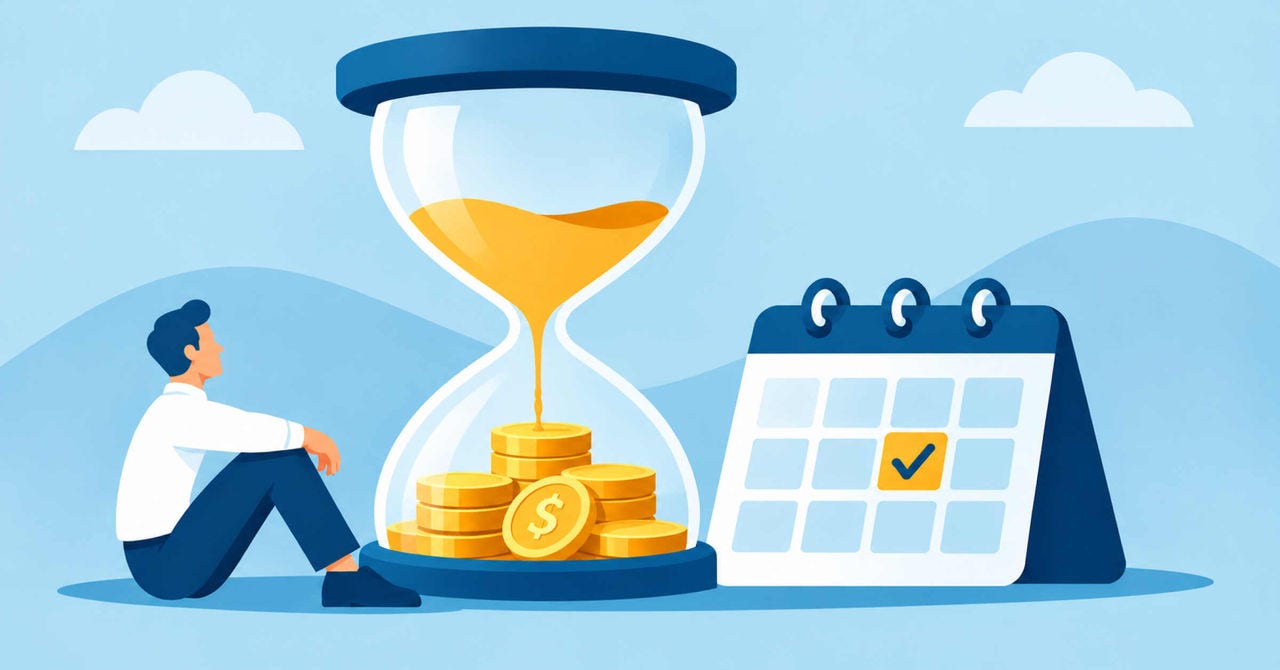
When you’re comparing personal loans, the repayment term is one of the most important numbers. It shapes your monthly payment, total interest cost, and breathing room in your budget. Knowing how long personal loan terms typically run, and when longer terms make sense for different cash flow and borrowing needs, helps you borrow with confidence.
In this article, we’ll look at how personal loan terms work, what ranges you’ll find, and how to choose the right one for your needs. We’ll also review examples, so you’ll clearly understand the impact on your borrowing costs and payment affordability.
Key takeaways
Lenders often offer personal loan terms of 24 to 84 months, though some extend terms to 120 months for qualified borrowers. Shorter terms mean bigger payments and less interest, while longer terms mean smaller payments but more interest. Consider your repayment timeline, cash flow, and total costs to choose the best loan term for your needs.
How personal loan terms work
A personal loan term refers to the repayment period over which you make monthly payments. For fixed-rate personal loans, your interest rate and payment amount remain the same over the term.
Most personal loans are unsecured, meaning they require no collateral, and have terms ranging from 24 to 84 months (two to seven years). Common term options include:
- 36 months (three years)
- 60 months (five years)
- 72 months (six years)
- 84 months (seven years)
A smaller number of lenders also offer terms of 96 to 120 months (eight to 10 years) for qualified borrowers, often with specific use cases or stricter credit requirements.
The impact of your loan term is straightforward: A longer one lowers your monthly payment but increases the total interest you pay over the life of the loan, while a shorter one costs you less overall but requires a higher monthly payment.
The longest available term isn't automatically the best choice. Instead, comparing payment affordability and the total cost across different term options is the smarter move.
What’s considered a “long” term?
In consumer lending, a "long" personal loan term generally refers to a repayment period of 60 months or more. You can find 60-month loans widely available at many banks, credit unions, and online lenders. Many lenders also offer terms of 72 and 84 months to borrowers with strong credit profiles and stable income.
These longer terms are particularly useful when you're managing a large loan balance and want to keep monthly payments predictable without stretching your budget.
How common are 10-year terms?
Terms of 96 to 120 months exist but are less common for unsecured personal loans.
You'll often find them through fintech companies or specialty loan providers serving high-income borrowers, such as BHG Financial. Credit unions sometimes also offer these very long terms when you’re borrowing money for specific purposes, such as home improvement.
At this range, lenders generally require stronger credit scores, lower debt-to-income (DTI) ratios, and larger loan amounts. Some 10-year terms also require collateral or restrict the use of funds. So, it’s worth confirming whether a loan is truly unsecured before applying.
The most repayment choices
Explore personal loan options that fit your finances†
† This is not a guaranteed offer of credit and is subject to credit approval.
How loan terms impact payments
The table below shows estimated monthly payments and total interest for a $100,000 personal loan at a fixed 14% APR across five common term lengths. These figures are illustrative and assume no origination fees.
|
Term |
Monthly payment |
Total interest paid |
Total repaid |
|---|---|---|---|
|
36 months (3 years) |
$3,418 |
$23,039 |
$123,039 |
|
60 months (5 years) |
$2,327 |
$39,609 |
$139,609 |
|
72 months (6 years) |
$2,061 |
$48,362 |
$148,362 |
|
84 months (7 years) |
$1,874 |
$57,416 |
$157,416 |
|
120 months (10 years) |
$1,553 |
$86,320 |
$186,320 |
Image is a representative example for illustrative purposes only and does not reflect actual customer information.
These examples illustrate why your choice of loan term matters. Stretching repayment from 60 to 120 months cuts your monthly payment by roughly $774. However, it also adds about $46,711 in total interest at a 14% APR.
If managing cash flow is your priority, the longer term may still be the right call, especially when there's no prepayment penalty, and you can pay extra when your income allows.
How lenders determine your repayment term options
Lenders don't assign terms arbitrarily. Several factors shape what they offer you, and understanding them helps you position your application for the best outcome.
- Credit profile and history: Borrowers with higher credit scores and longer credit histories typically qualify for longer terms. A strong credit profile signals lower default risk, giving lenders greater confidence to extend repayment over a longer period.
- Debt-to-income ratio (DTI): Your DTI ratio compares your monthly debt obligations to your gross monthly income. Lenders use this to assess whether you can comfortably manage a new payment. Lower DTI ratios generally support access to longer terms and larger loan amounts. And, if you’re borrowing a large amount, a low DTI ratio helps with approval for short-term loans with higher payments.
- Loan size and purpose: Larger loan amounts often come with longer available terms. The purpose also matters, as loans for debt consolidation, home improvement, and major purchases may each carry different term options depending on the lender's policies.
- Unsecured vs. secured: Unsecured loans carry more risk for the lender because there's no collateral—like a car, home, or savings deposit—to recover if you default. As a result, some lenders reserve their longest terms for secured products or require stronger credit profiles for unsecured loans, offering terms of 84 to 120 months.
- Co-borrowers and income stability: Adding a co-borrower with strong credit and a high income can broaden your eligibility for longer terms or better rates. Lenders also weigh income stability, particularly for self-employed borrowers or those with variable income streams.
How to choose the right term for your budget and goals
Choosing a personal loan term isn't simply going with whichever offers the lowest monthly payment. You should match your repayment schedule to your income, goals, and tolerance for interest cost. Here's how you can pick the right term for your situation.
1. Determine what you can afford
Before looking at term options, estimate the monthly payment you can comfortably afford while keeping some margin in your budget for unexpected expenses.
One rule of thumb is that your new loan payment—combined with existing debt obligations—should leave at least six months’ worth of essential expenses accessible in savings.
You can also consider the 36% DTI ratio that the Consumer Financial Protection Bureau recommends, meaning your total debt payments should take up no more than 36% of your gross income. For example, if you earn $150,000 per year, you’d ideally spend no more than $4,500 on monthly debt payments.
Once you’ve identified a comfortable payment ceiling, you can work backward to find the term that fits. Prequalification is a good way to do this, as you can see potential payment amounts, rates, and terms before you commit to a formal application and hard credit pull.
2. Compare total cost, not just payment
While the monthly payment is the number that catches your eye, the total interest paid is the number that matters most. Model at least three scenarios before you decide.
Let's look at an example of a $25,000 loan with a 12% APR, which is close to the 11.40% average personal loan APR that the Federal Reserve reported in February 2026:
|
Term length |
Estimated payment |
Estimated total interest |
|---|---|---|
|
60 months |
$556 |
$8,367 |
|
84 months |
$441 |
$12,071 |
|
120 months |
$359 |
$18,041 |
Sources: Investopedia; Experian
Here, you can see that even extending your term from 60 to 84 months significantly increases your interest costs by around 44%, while your payment decreases by around 20%. So, consider the cost tradeoff so you can make an informed term decision.
3. Match the term to your timeline
Think about when you want to be debt-free and whether your income is likely to grow, stay flat, or fluctuate over that period.
A shorter term can make sense when you want to get out of debt quickly without relying on making extra principal payments. However, it’s ideal when you have a stable or growing income that can consistently support larger payments. Otherwise, an unexpected major expense may lead to a missed payment, which can damage your credit score.
If you’re uncertain about your income trajectory, choosing a longer term with no prepayment penalty is a sound strategy. You lock in a lower required payment, which protects you during slower periods. Plus, you have the flexibility to pay ahead aggressively and get out of debt sooner.

FYI
By consistently adding 10% or more to your required monthly payment, you may be able to effectively shorten repayment by 12 to 24 months without formally refinancing.
Strategies to reduce your total cost of borrowing
As you’ve seen, choosing a longer term doesn't mean you're locked into paying maximum interest. With the right approach, you can reduce your total cost with any loan term.
Here are some important tips:
- Confirm there's no prepayment penalty before you sign: Some lenders charge a fee for paying off a loan early. Before accepting any offer, verify that extra payments and early payoff are penalty-free. This is non-negotiable if you plan to pay ahead.
- Apply extra payments directly to principal: When you make an additional payment, instruct your servicer to apply it to the loan principal, not to advance your next due date. Advancing the due date reduces your required payment but doesn't reduce the principal or interest that accrues on it.
- Use biweekly payments or a "13th payment" strategy: Splitting your monthly payment in half and paying every two weeks results in 26 half-payments per year, so you make 13 full payments instead of 12. That single extra payment each year can still meaningfully shorten your effective term and reduce total interest costs.
- Be cautious about refinancing: Refinancing into a new loan resets your amortization schedule. If you refinance a loan you've been paying for several years into a new long-term loan, you may end up paying more in total interest even if the new rate is lower. Run the full numbers before refinancing.
Get a long-term personal loan through BHG Financial
BHG Financial caters to high-income borrowers who need a large, flexible loan without the risks of secured financing. Our unsecured personal loans come in amounts up to $250,0001 with fixed rates and terms from 24 to 120 months1,2 for qualified borrowers. No personal collateral is required, and payment amounts and interest costs are predictable.
According to the 2026 BHG Financial Consumer Debt and Finances Survey, 65% of Americans say economic uncertainty is making it harder to make sound financial decisions. A fixed-rate loan with predictable payments and a term you control is one way to bring clarity back to your monthly budget.
Use our easy prequalification process to estimate your monthly payment and rate, with no impact on your credit score.3 You’ll get a personalized offer in seconds4 based on your actual profile, with a dedicated, U.S.-based loan specialist to walk you through your options. Once you apply, an approval decision can come in as little as 24 hours and funding in as few as five days.4
More ways to structure repayment
See personal loan options with flexible terms†
† This is not a guaranteed offer of credit and is subject to credit approval.
Personal loan term FAQs
How long are terms usually allowed for personal loans?
Many borrowers qualify for unsecured personal loan terms of two to five years. Some lenders also advertise terms of seven to 10 years for strong applicants or specific products, such as secured or purpose-restricted loans. Knowing the common caps helps you target lenders more likely to approve the longest term you want.
Are long personal loan terms harder to qualify for?
Long terms can come with stricter underwriting, including higher minimum credit requirements, lower DTI ratio requirements, or lower maximum loan amounts. Income stability is also important for longer repayment timelines.
How do I find the best personal loan with long repayment terms without overpaying in interest?
Finding the best long-term personal loan means comparing APRs, origination fees, and total repayment costs across multiple lenders. Prequalification can help you review multiple offers with a soft credit check, then narrow down to the best few for a full application. If your goal is a lower monthly payment, you’ll also want to compare how much extra interest you pay by stretching the term from five years to seven or 10.
Recommended articles

Personal Loans
Stretch the Term, Shrink the Stress: Why Longer Loan Terms Can Make Sense
March 5, 2026 | 8 min read
Personal Loans
How to Find Long Term Loans With Low Payments
September 28, 2026 | 10 min read
Personal Loans
Are Personal Loans a Good Idea for High Earners? What the Data Says
October 31, 2025 | 7 min read
Not all solutions, loan amounts, rates or terms are available in all states.
Advertised rates are subject to change without notice.
1 Terms subject to credit approval upon completion of an application. Loan sizes, interest rates, and loan terms vary based on the applicant's credit profile. Not all applicants will qualify for the lowest rate.
2 Personal Loan Repayment Example: A $60,000 personal loan with a 7-year term and an APR of 17.06% would require 84 monthly payments of $1,191.38.
3 There is no impact on your credit for applying. For personal loans, a complete credit history, which will appear as an inquiry on your credit report, will be performed upon acceptance and funding of the loan and may impact your credit.
4 This is not a guaranteed offer of credit and is subject to credit approval.
No application fees, commitment, or impact on personal credit to estimate your payment.
Consumer loans funded by Pinnacle Bank, a Tennessee bank, or County Bank. Equal Housing Lenders. 
For California Residents: Personal loans made or arranged pursuant to a California Financing Law license - Number 603G493.

Bankers Healthcare Group, LLC d/b/a BHG Financial NMLS ID# 2040829