
Personal loans
Customized financing to consolidate high-interest debt and unlock financial flexibility.
WAYS TO USE YOUR LOAN
Resources
Guides, insights, and research – explore our latest articles.
About BHG
Programs
How to Get a $30,000 Loan
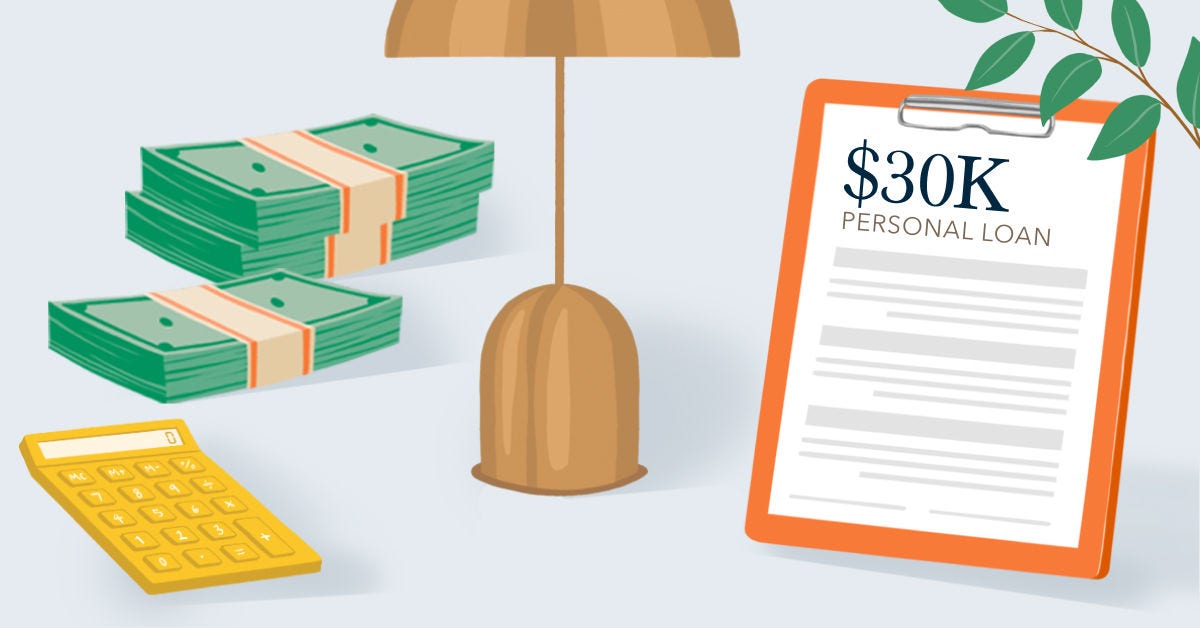
A $30,000 loan can offer great peace of mind—you could pay down high-interest debt, fund a home project, or simply create more room in your monthly budget.
For most borrowers, a personal loan is the fastest and most flexible path since no collateral is required, the payments are fixed, and funds are delivered in a lump sum.
In this guide, you'll find everything you need to make a confident decision, including what lenders look for and estimated monthly payments across common rate and term scenarios.
We also compare personal loans to top alternatives, so you can weigh your options before you apply.
What is a $30,000 personal loan?
A $30,000 loan is most commonly an unsecured personal loan. These loans are fixed-rate, fixed-term installment loans that don't require you to put up your home, car, or any other asset as collateral.
You borrow a set amount, agree to a repayment schedule, and make the same payment every month until the loan is paid off.
High earners use $30,000 loans for many reasons, including consolidating credit card debt, covering home renovations, managing a large medical or legal expense, or bridging a cash flow gap without tapping into investments or home equity.
You can get a personal loan from banks, credit unions, and online lenders. Each operates with different underwriting standards, funding timelines, and fee structures, so it’s worth comparing your options.
See your offer † real fast
Just a few easy steps to get prequalified!
† This is not a guaranteed offer of credit and is subject to credit approval.
What are the monthly payments on a $30,000 loan?
Before you borrow, it helps to see what you’ll actually pay over the life of the loan—not just the monthly payment. A lower monthly payment over a longer term often means significantly more interest paid overall.
The table below shows estimated monthly payments, total interest paid, and total cost of a $30,000 loan across common term and APR scenarios.
|
Term |
APR |
Monthly payment |
Total interest |
Total borrowing cost |
|---|---|---|---|---|
|
3 years |
8% |
$940 |
$3,843 |
$33,843 |
|
3 years |
12% |
$996 |
$5,871 |
$35,871 |
|
3 years
|
18% |
$1,804 |
$9,044 |
$39,044 |
|
7 years |
8% |
$468 |
$9,277 |
$39,277 |
|
7 years |
12% |
$530 |
$14,484 |
$44,484 |
|
7 years |
18% |
$631 |
$22,965 |
$52,965 |
|
10 years
|
8% |
$364 |
$13,678 |
$43,678 |
|
10 years |
12% |
$430 |
$21,650 |
$51,650 |
|
10 years
|
18% |
$541 |
$34,867 |
$64,867 |
Image is a representative example for illustrative purposes only and does not reflect actual customer information.
These figures are calculated using standard amortization and are illustrative only. Your actual rate and payment will depend on your credit profile, income, and lender terms.
How to qualify for a $30,000 personal loan
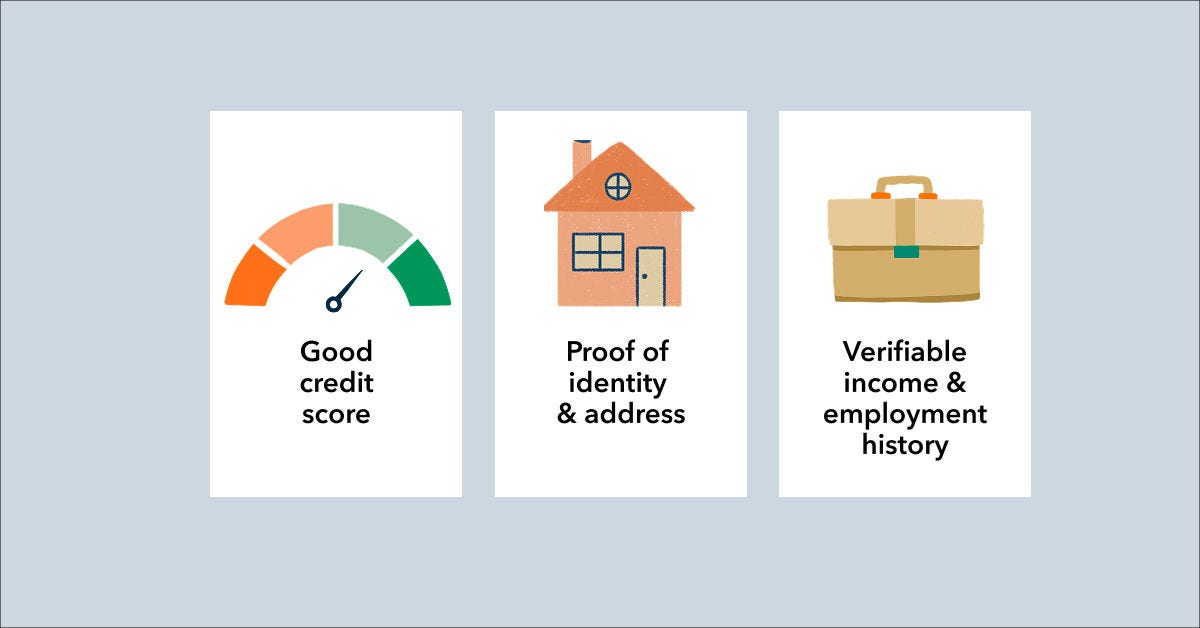
Most lenders evaluate the same core eligibility factors when you apply for a personal loan of any size: your credit profile, income, and existing debt load. These factors determine whether you're approved and the rate you’re offered.
What lenders consider
As a high earner, your credit is likely to be in the prime or super prime range, which works to your advantage when securing the best possible terms.
- Credit score: Many lenders look for a credit score in the mid-600s or higher to approve a $30,000 unsecured loan. Borrowers in the 740+ range typically qualify for the most competitive APRs. A score below 660 doesn't automatically disqualify you, but it may limit your options or result in a higher rate.
- Credit history: Lenders also look beyond the score itself. A thin credit file—few accounts or limited installment loan history—can raise questions even when your score looks solid. An established, on-time payment history across multiple accounts will strengthen your application.
- Recent activity: Multiple hard inquiries in a short window, a recently opened account, or a late payment in the past 12 to 24 months can slow or stall your approval.
- Income: Minimum income requirements vary significantly between lenders. However, a good rule of thumb is to wait to apply for a personal loan until you can show reliable, healthy income.
DTI and affordability
Another important consideration is your debt-to-income ratio (DTI), which measures your monthly debt obligations as a percentage of your gross monthly income.
For example, if you earn $8,000 a month and carry $2,400 in monthly debt payments, your DTI is 30%.
Many loan providers prefer a DTI under 36% for unsecured loans. However, some providers, including BHG Financial, will approve higher DTIs if your broader financial profile supports it. For example, higher-income borrowers may still qualify for credit products because a substantial income can reassure lenders that the borrower has sufficient funds to repay the loan, even if the DTI is elevated.
Running the numbers before you apply gives you a clearer sense of where you stand—and which lenders are most likely to work with your profile.
Documentation requirements
Most lenders ask for a standard set of documents to verify your identity and income:
- Government-issued photo ID (driver's license or passport)
- Proof of income: recent pay stubs and/or W-2s for salaried employees
- Two years of federal tax returns for self-employed borrowers or those with variable income
- Bank statements (typically 2–3 months)
- Proof of address (utility bill, lease, or bank statement)
If your income includes variable compensation, business distributions, or multiple revenue streams, you may need to provide additional documentation, such as tax returns.
In these cases, it’s best to prioritize lenders whose underwriting is built to handle variable incomes. BHG has a long history of working with high-earning professionals with complex finances.
How to get a $30,000 personal loan
Getting a personal loan is a relatively straightforward process, but the decisions you make early, particularly around which lender you choose and how you compare offers, have a real impact on your total cost.
Here’s what to expect:
1. Prequalify and check loan offers
Start by checking your rate online. Prequalifying only requires a soft credit check, which doesn't impact your credit score.
You'll enter basic information about yourself, such as your income and desired loan amount, before receiving your estimated loan offers.
2. Evaluate your options
Not all loan offers are equal, so compare your options closely. Look at the APR—not just the interest rate—since it reflects the actual cost you’re borrowing, including any origination or administrative fees.
Compare repayment terms carefully: a longer term lowers your monthly payment and keeps cash flow handy, but increases total interest paid. Consider funding timelines if speed matters and pay attention to whether the lender charges prepayment penalties, which can limit your flexibility if you want to pay off the loan early.
3. Complete your application
Once you've selected an offer and are ready to move forward, you'll complete a full application with your chosen lender (which requires a hard credit check that may cause a temporary dip in your score).
Most lenders assign a loan specialist or processor to your file who reviews your qualifications and works with you to finalize terms. Have your documentation ready before you apply—it speeds up the process considerably.
4. Get a decision and receive your funds
Most lenders can make approval decisions within a day or two. If approved, funds are typically delivered in a lump sum within seven days—in some cases, same-day funding may be possible. Timelines may vary based on verification requirements and document turnaround.
$30,000 personal loan compared to alternatives
A personal loan is the right fit for many situations, but not all. The best option depends on what you're funding, how quickly you need the money, and whether you're willing to use an asset as collateral.
A personal loan is a good fit when:
- You want a fixed monthly payment and a defined payoff date
- You need funds quickly and don't want to use collateral
- You need a debt consolidation loan to consolidate multiple high-APR credit cards into one payment
- You're covering a significant one-time expense (medical, legal, home improvement) and want a structured repayment plan
A HELOC or home equity loan may make more sense when:
- You own a home with significant equity and want a potentially lower rate (though variable)
- You're comfortable using your home as collateral and understand the risk that comes with it
- You have time for a longer application and closing process (typically two to six weeks)
- The funds are for home improvements, where HELOC interest may be tax-deductible for qualifying borrowers
A balance transfer credit card may work when:
- The balance you're moving is under $15,000, and you're confident you can pay it off within the promotional period (typically 12–21 months)
- You've accounted for the balance transfer fee, usually 3%–5%, and know what the reversion APR is if you don't pay it off in time
- You understand that carrying a large balance on a new card can temporarily increase your credit utilization
Get a $30,0001 loan through BHG Financial
Whether you're looking for a $30,000 loan1 to consolidate debt, cover a large expense, or free up monthly cash flow, BHG Financial offers fixed rates, terms up to 10 years,1,2 and funding in as few as five days.3
Your offer will be tailored to your needs, and a dedicated U.S.-based loan specialist will work with you throughout the entire process, from application to funding.
Get your personalized loan estimate in just seconds,3 with no impact to your credit score.4
Check my rate
See your offer † real fast
Just a few easy steps to get prequalified!
† This is not a guaranteed offer of credit and is subject to credit approval.
Frequently asked questions (FAQs)
How hard is it to get a loan for 30,000?
Borrowers with a credit score in the mid-600s or higher, steady income, and a DTI under 36% are generally well-positioned for a $30,000 loan or higher. If your credit is thin or your debt load is high relative to your income, approval gets harder, and your rate will likely reflect that.
What credit score do you need for a 30,000 loan?
There's no universal minimum—each lender sets its own threshold. Most mainstream lenders want to see a score in the mid-600s or higher for a $30,000 unsecured loan. Scores in the 740+ range typically unlock the most competitive APRs and the broadest lender options. A lower score doesn't automatically disqualify you, but it will likely narrow your options and push your rate higher.
Is a $30,000 loan a lot of debt?
In absolute terms, yes. But the more useful question is whether it fits your cash flow and overall debt picture. A $30,000 loan at 8% APR over five years runs about $608 per month. For a high earner using it to consolidate higher-interest debt or free up monthly cash flow, that payment may actually improve their financial position. Context matters more than the number itself.
Where can I get a $30,000 loan?
You can get a $30,000 loan from banks, credit unions, online lenders, and peer-to-peer platforms. BHG Financial works with high-earners seeking loans up to $250,0001—no collateral required.
Recommended articles

Personal Loans
10-Year Personal Loans: What to Know About Long-Term Loans
June 24, 2026 | 7 min read
Personal Loans
How to Get a $100,000 Loan: Requirements, Rates, and Alternatives
June 16, 2026 | 8 min read
Personal Loans
Are Personal Loans a Good Idea for High Earners? What the Data Says
October 31, 2025 | 7 min read

Personal Loans
Should You Dip Into Savings or Use a Loan? How to Decide
October 14, 2025 | 6 min read

Personal Loans
Should You Get a Personal Loan to Pay Off a Credit Card?
June 10, 2026 | 7 min read
Personal Loans
Personal Loan vs Credit Card: The Surprising Way to Cut Interest Costs
June 23, 2025 | 6 min read
Advertised rates are subject to change without notice.
Not all solutions, loan amounts, rates or terms are available in all states.
1 Terms subject to credit approval upon completion of an application. Loan sizes, interest rates, and loan terms vary based on the applicant's credit profile. Not all applicants will qualify for the lowest rate.
2 Personal Loan Repayment Example: A $60,000 personal loan with a 7-year term and an APR of 17.06% would require 84 monthly payments of $1,191.38.
3 There is no impact on your credit for applying. For personal loans, a complete credit history, which will appear as an inquiry on your credit report, will be performed upon acceptance and funding of the loan and may impact your credit.
4 This is not a guaranteed offer of credit and is subject to credit approval.
No application fees, commitment, or impact on personal credit to estimate your payment.
Consumer loans funded by Pinnacle Bank, a Tennessee bank, or County Bank. Equal Housing Lenders. 
For California Residents: Personal loans made or arranged pursuant to a California Financing Law license - Number 603G493.

Bankers Healthcare Group, LLC d/b/a BHG Financial NMLS ID# 2040829