
Personal loans
Customized financing to consolidate high-interest debt and unlock financial flexibility.
About BHG
Programs
The Credit Score War and What It Means for High-Earners
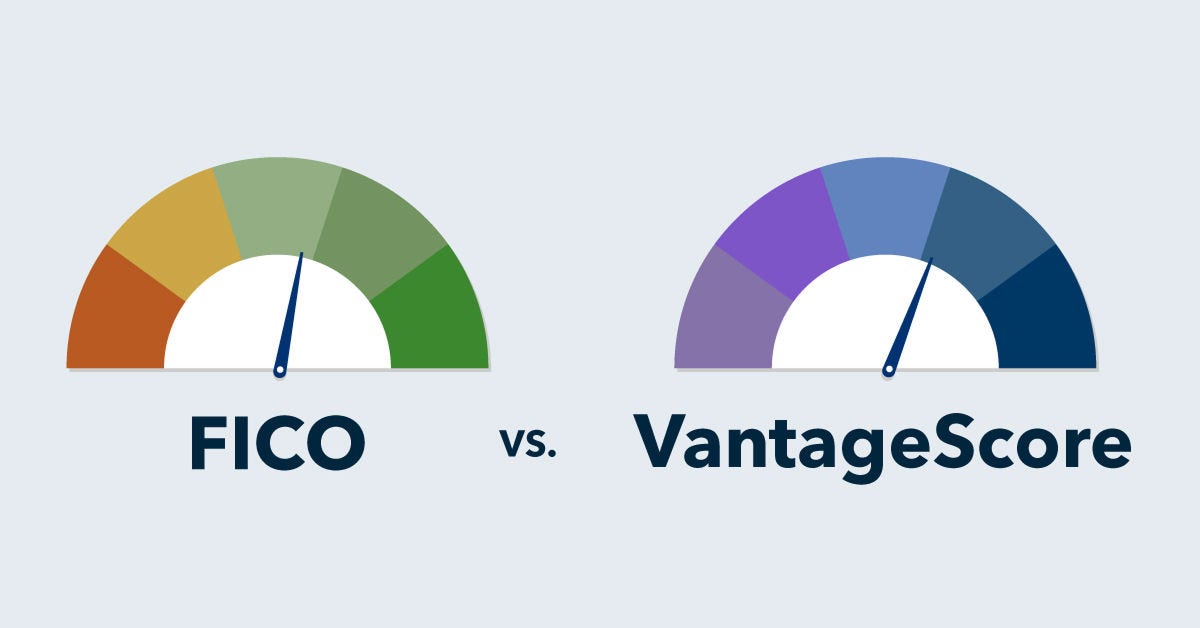
For decades, FICO scores have shaped how lenders evaluate credit risk—and how borrowers experience access to credit. That framework is now expanding.
CNN recently covered what industry insiders have called the "credit score war": a growing competition between FICO and VantageScore, a newer model jointly developed by all three major credit bureaus. At the center of that conversation is VantageScore 4.0, which introduces a different way of evaluating credit behavior over time.
Much of the attention has focused on VantageScore 4.0’s ability to score consumers with limited credit histories—a meaningful step toward broader access. But there’s a less obvious winner in this shift: high earners managing increasingly complex financial lives.
Earning more doesn’t make credit simpler; it often makes it harder to interpret. And that’s exactly where trended data changes the game.
VantageScore 4.0 fundamentally alters what “creditworthy” looks like—and for high earners, trended data makes disciplined debt consolidation more powerful than ever.
What makes VantageScore 4.0 different from FICO scores
Static vs. trended credit data
Classic FICO models evaluate your credit profile at a single point in time. Your score reflects what your report looks like today: how much you owe, whether recent payments were made on time, and what percentage of available credit you're using.
VantageScore 4.0, which rolled out in 2017, does something different. It is the first credit scoring model to incorporate trended data from all three major bureaus, analyzing up to 24 months of credit behavior to identify patterns:
- Are balances moving down or up?
- Are payments consistent?
- Is utilization improving, even if it isn’t perfect yet?
In other words, it quantifies momentum.
Earlier models—including FICO Score 8, FICO Score 9, and VantageScore 3.0—don't capture trajectory. They can't distinguish between a borrower who has been steadily paying down debt over 18 months and one who opened a new account last week and looks identical on paper. VantageScore 4.0 can.
The model also shifts some weight away from credit utilization and toward payment history. That subtle shift favors borrowers who are actively improving, not just maintaining ideal ratios.
For high earners carrying large balances for strategic reasons, this is an important step toward more comprehensive financial reporting.
Why trended data creates a more complete credit picture
Trended data recognizes behaviors that static models often miss, such as:
- Steady balance reduction
- On‑time payments month after month
- Intentional restructuring of debt
If you've been reducing balances across three accounts over the past year, VantageScore 4.0 registers that momentum. A borrower who paid down $20,000 in revolving debt over 18 months tells a very different story than one who opened a new card and hit 40% utilization last month—even if their scores look similar today.
Why high earners are uniquely affected by this shift
High income doesn’t mean simple credit profiles
High-income borrowers often carry more credit complexity than their scores reflect. Multiple cards with high limits, revolving expenses, investment-backed leverage, and irregular income timing are common in this segment.
Traditional scoring can misread this complexity, even when the underlying behavior is financially disciplined.
A physician carrying $80,000 across four credit cards—while making every payment on time and investing consistently—can look riskier on a static FICO report than someone with a single modest balance. High utilization often suppresses credit scores even when the borrower is managing debt deliberately and strategically.
Rising credit stress among high earners
Financial stability and financial stress increasingly coexist in the same household. Though TransUnion projects that credit card delinquencies will hold steady through 2026, the risk is increasingly concentrated among borrowers managing higher balances, multiple accounts, and uneven cash flow.
BHG Financial’s research on consumer finances and debt reflects this disconnect. While more than half of respondents say they feel financially comfortable or wealthy, over a third live paycheck to paycheck—including nearly a quarter of high earners earning $100,000 or more annually. For many, this pressure stems from juggling competing priorities, such as family obligations, career demands, and the need to preserve liquidity.
VantageScore 4.0 is better equipped to distinguish borrowers under productive financial pressure—those actively managing and improving their debt—from those in genuine distress. Trended scoring helps separate the two.
The link between VantageScore 4.0 and debt consolidation
Why debt consolidation improves credit trends
Debt consolidation already delivers well-known credit benefits under traditional scoring models. Paying down revolving balances lowers credit utilization, which typically improves FICO scores relatively quickly. In fact, we’ve found that most BHG Financial customers see a 30-plus-point increase in their score within a few months of consolidating personal debt.*
Under VantageScore 4.0, the benefits compound over time. Consolidation leads to a one-time reduction in utilization while also initiating a sustained pattern that trended data is designed to reward. With fewer revolving accounts, consistent on-time payments, and clear and consistent payments on outstanding balances, debt consolidation is rewarded with VantageScore 4.0.
* Based on internal data, most BHG debt consolidation borrowers may improve their FICO® score by 30+ points within 2 months. Credit scores depend on many factors and individual results may vary based on personal spending habits.
See your offer † real fast
Just a few easy steps to get prequalified!
† This is not a guaranteed offer of credit and is subject to credit approval.
How VantageScore 4.0 rewards sustained improvement
Consider what consolidation looks like from a trended data perspective. A borrower who consolidates $75,000 in credit card and personal loan debt into a single fixed-rate loan immediately collapses multiple revolving accounts into one installment account. Over the following months, VantageScore 4.0 registers a steady decline in outstanding balances, a consistent payment record, and reduced exposure across revolving lines.
The model sees not just a better number, but a better borrower who has demonstrated sustained financial discipline over time.
Why this matters as lenders adopt VantageScore 4.0
Growing acceptance across the lending ecosystem
In 2025, the Federal Housing Finance Agency expanded its use of VantageScore 4.0 in certain mortgage‑related evaluations, and adoption is growing across consumer lending, auto financing, and credit card issuance.
At BHG Financial, we’ve always taken a holistic approach to underwriting, evaluating income strength, real estate and investment holdings, length of credit history, and future potential alongside traditional credit metrics. As VantageScore 4.0 adoption continues to expand across the lending ecosystem, it will become part of our evaluation framework as well—a natural extension of the comprehensive view we already apply to every borrower.
For our clients, this is a benefit. Borrowers who are actively improving their debt profile won't just feel better financially. Over time, they'll be seen as stronger candidates by more lenders, with better access to larger loan amounts and more favorable terms.
Implications for loan pricing and access
As scoring becomes more sensitive to how borrowers manage debt over time:
Improving profiles may unlock better terms
- High earners with disciplined strategies stand to benefit disproportionately
- Those with thin credit files can access to credit by providing a score faster
- Progress drives outcomes and scores
See your offer † real fast
Just a few easy steps to get prequalified!
† This is not a guaranteed offer of credit and is subject to credit approval.
What high earners should take away
Debt strategy is now a credit strategy
Consolidation has always offered practical benefits—lower monthly payments, reduced interest costs, and simplified cash flow. Under models like VantageScore 4.0, it also produces a behavioral record that lenders can evaluate across time.
For high earners with complex credit profiles, proactive debt management directly shapes their score, which in turn, impacts borrowing capacity, loan terms, and financial flexibility over time.
Timing and consistency matter more than ever
The single most important implication of trended scoring is this: the sooner you act, the longer your improvement record becomes. A borrower who consolidates today and makes consistent payments for 24 months will build a more compelling credit narrative than one who waits another year to start.
This moves most away from chasing short-term score improvements and toward building a long-term record of financial progress.
How BHG helps high earners turn financial momentum into credit strength
Credit scoring under the VantageScore 4.0 model aims to reward sustained financial behavior—especially for high earners navigating complex financial realities. Now, strategic debt management has become a competitive advantage that can shape access, pricing, and flexibility across future borrowing decisions.
By helping borrowers consolidate and structure debt intentionally, BHG Financial helps turn financial momentum into a clearer, stronger credit narrative over time. Ready to start building that record? Estimate your monthly payment in seconds with no impact on your credit score.1
Check my rate
See your offer † real fast
Just a few easy steps to get prequalified!
† This is not a guaranteed offer of credit and is subject to credit approval.
Not all solutions, loan amounts, rates or terms are available in all states.
1 There is no impact on your credit for applying. For personal loans, a complete credit history, which will appear as an inquiry on your credit report, will be performed upon acceptance and funding of the loan and may impact your credit.
Consumer loans funded by Pinnacle Bank, a Tennessee bank, or County Bank. Equal Housing Lenders. 
No application fees, commitment, or impact on personal credit to estimate your payment.
For California Residents: Personal loans made or arranged pursuant to a California Financing Law license - Number 603G493.

Bankers Healthcare Group, LLC d/b/a BHG Financial NMLS ID# 2040829