
Personal loans
Customized financing to consolidate high-interest debt and unlock financial flexibility.
WAYS TO USE YOUR LOAN
Resources
Guides, insights, and research – explore our latest articles.
About BHG
Programs
What 20 Years of Credit Decisions Taught Me About Risk
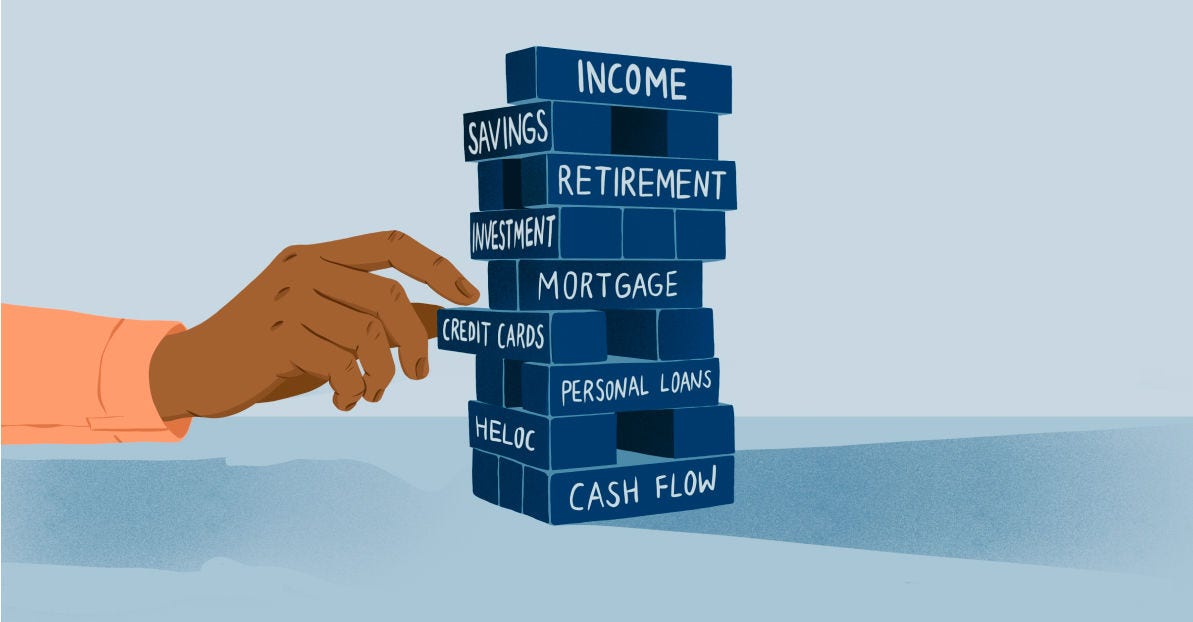
Table of Contents
- Risk is defined by structure, not just income
- Why high earners often carry more exposure
- The credit files that changed how I think about debt
- The difference between “manageable debt” and “strategic debt"
- Why consolidation can reduce risk under the right conditions
- What high earners should evaluate first
- The mistake I see most often
- A better question to ask yourself
Over the past two decades, I’ve reviewed thousands of credit files across nearly every income level, and here’s what I’ve learned about risk: it tends to follow a pattern, but not the one most people expect.
Some of the most fragile profiles belong to high earners with strong credit histories. They meet every surface-level expectation (on-time payments, manageable credit mix), but their obligations are structured in ways that limit flexibility.
A question I encounter often is some version of: “I’ve never missed a payment. Why is this a concern?”
Payment history is an important factor in any credit decision, but the reality is that debt levels relative to income and your assets matter more. Lenders determine risk based on how manageable the debt is, and whether there’s flexibility built into the overall financial picture.
What I'm really evaluating is resilience—how a financial profile holds up during a job transition, a market correction, or an unexpected expense. Understanding that requires looking beyond payment history to the durability of the underlying structure.
Risk is defined by structure, not just income
High income can create a kind of financial blind spot. When earnings are strong, it's possible to absorb multiple obligations without feeling the strain, even when they are quietly working against each other.
Take credit card debt as an example. Many six-figure earners carry meaningful balances. This alone doesn’t automatically signal a problem, even when credit card APRs are still hovering near record highs. What matters is the broader financial context.
A borrower carrying a significant card balance who still contributes consistently to retirement, maintains liquid savings, and has access to equity or other financial buffers is in a very different position than someone who has depleted those resources first.
The risk profile changes when those supports are no longer in place. If the applicant has depleted savings, paused retirement contributions, or taken on additional loans to stay afloat, the margin for error becomes much smaller.
I’ve reviewed files with strong income, perfect payment history, and very low credit card balances relative to credit limits—often resulting in high FICO scores that should qualify them for a loan. However, the overall setup included second mortgages, home equity lines of credit, and other unsecured loans.
These debts are all considered "good" by the credit-scoring world, but if their income or access to liquidity can’t cover the monthly payments, any financial shock could tip them over the edge.
Why high earners often carry more exposure than they realize
Even well-compensated professionals can end up with financial profiles that are more vulnerable than they appear.
Several factors tend to contribute:
- Income concentration: Many high earners rely on a single employer, a specialized skill set, or a concentrated source of income. That can appear stable, but it limits flexibility if conditions change, especially during periods of economic uncertainty or recession.
- Tax-driven decisions: Strategies designed to reduce taxable income can tighten cash flow. For example, maximizing retirement contributions or using certain real estate tax strategies can reduce available liquidity in the short term.
- Fragmented debt: Balances spread across credit cards, personal loans, and legacy obligations add complexity and cost that compound over time.
The credit files that changed how I think about debt
Patterns become clearer over time, and certain types of profiles show up again and again.
One example is a six-figure earner with excellent credit and limited liquidity. Their net worth is near zero, or possibly even negative. Even though payments are consistent, there’s little available if conditions change. In this instance, they may be seen as a riskier borrower, despite a strong, albeit fragile, credit profile.
Another common example is an applicant with meaningful assets, but short-term, high-interest debt is driving monthly payments higher than expected. Even if their steady income makes the obligations affordable, the debt still elevates monthly payments relative to their cash flow, which lenders may perceive as risky.
There are also applicants who appear stable across every traditional metric—steady income, consistent payments—but whose financial position depends heavily on uninterrupted earnings. A single disruption can shift the entire profile.
None of these situations disqualify a prospective borrower on its own. The risk builds, and becomes easier to spot, when multiple factors combine and reduce flexibility.
See what structured financing looks like
Get a personalized loan estimate in seconds †
† This is not a guaranteed offer of credit and is subject to credit approval.
The difference between “manageable debt” and “strategic debt”
Manageable debt means you can make the payments. Strategic debt means those payments are actively working in your favor—supporting liquidity, preserving flexibility, and fitting into a longer-term plan.
Two borrowers carrying the same amount of total debt can have very different experiences, depending on structure, such as:
- Whether payments are fixed or variable
- How long repayment timelines extend
- How interest accumulates across accounts
For example, a fixed-rate loan that stretches payments over a longer loan term at a competitive rate can be a structural choice that keeps options open and creates predictability.
Research from BHG’s 2026 Consumer Debt and Finances survey reinforces this perspective: borrowers who approach debt with a clear plan for repayment, including debt consolidation, report greater confidence in their ability to manage payments compared to those carrying fragmented debt.
Structure, more than balance size, tends to drive that sense of control.
"Manageable debt means you can make the payments. Strategic debt means those payments are actively working in your favor—supporting liquidity, preserving flexibility, and fitting into a longer-term plan."
Why consolidation can reduce risk—but only under the right conditions
Most six-figure earners explore debt consolidation to improve structure, not out of financial distress. But it’s important to clarify that consolidation by itself is not a risk reducer. What actually reduces risk is achieving meaningful monthly payment savings, or meaningful interest savings, while maintaining access to credit for the unexpected.
Bringing multiple obligations into one structure simplifies repayment and creates predictability—both things that make financial performance easier to manage and track.
At the same time, maintaining access to revolving credit can still serve a purpose. Credit cards, when used responsibly, offer flexibility for short-term needs. The risk increases when balances extend over months or years and interest compounds.
There are also limits to what consolidation can solve. Multiple outstanding personal loans, for example, can point to a pattern that requires behavioral adjustment in addition to restructuring. In many cases, having more than two starts to raise broader questions about how debt is being used.
The question I'm always asking is: does the new structure create a clearer, more resilient payment path with fewer variables, and will it hold up if your income changes? If yes, consolidation can improve both financial stability and overall risk profile. If consolidation will just move debt around without changing the underlying math, it's not your best next move.
What high earners should evaluate before making a debt decision
Before making changes, think like a credit committee. These are the areas worth assessing before acting:
- Cash-flow durability: Is your financial plan dependent on a single income source, and how would it hold up under different conditions?
- Liquidity buffer: Do you have accessible reserves—cash, open credit, or liquid investments—to absorb a significant unplanned expense?
- Interest and rate structure: Are the current terms on your existing debt competitive, and how do they compare with what you might qualify for today?
- Risk tolerance: How much variability can your plan absorb without requiring a major adjustment?
After 20 years in credit, this is the mistake I see most often
The most common issue isn't a lack of income or opportunity; it's timing—specifically, waiting until pressure builds before making changes. By then, flexibility is already limited, and options become narrower. Financial strength on paper doesn't always translate to the flexibility people expect.
When a 20%-plus APR starts compounding against you, for example, short-term solutions become more appealing. The math can make a compelling case for redirecting savings to pay down a high-rate balance or tapping retirement accounts to eliminate it more quickly. After all, where else are you going to find a guaranteed 25% after-tax return?
In practice, these "quick fixes" that use savings to eliminate high-APR debt create trade-offs, especially if they’re made without addressing the underlying pattern or changing the behavior that led to the debt in the first place. Meanwhile, long-term priorities like retirement fall behind, which become harder to correct later.
Structured debt (like fixed-rate unsecured personal loans) can itself be a forcing function for better spending behavior. In many cases, maintaining consistent savings while gradually improving debt structure leads to better long-term outcomes. Progress depends as much on behavior as it does on numbers.
A better question: “How does this hold up under pressure?”
Strong income isn't immunity—or even a reasonable long-term plan. What creates real financial resilience is debt that's structured to give you flexibility to absorb disruptions without immediate strain.
Every financial decision is worth evaluating against less predictable conditions: a shift in income, a significant unplanned expense, a broader economic change.
Well-structured debt creates options in those scenarios. That's the risk mindset I'd want every high earner to bring to their next debt decision—when flexibility is built in early, it becomes easier to navigate change later.
Ready to see what your debt could look like with a clearer structure? See your personal loan options in seconds1 with no impact to your credit score.2
See your offer † real fast
Just a few easy steps to get prequalified!
† This is not a guaranteed offer of credit and is subject to credit approval.
Not all solutions, loan amounts, rates or terms are available in all states.
1 This is not a guaranteed offer of credit and is subject to credit approval.
2 There is no impact on your credit for applying. For personal loans, a complete credit history, which will appear as an inquiry on your credit report, will be performed upon acceptance and funding of the loan and may impact your credit.
Consumer loans funded by Pinnacle Bank, a Tennessee bank, or County Bank. Equal Housing Lenders. 
No application fees, commitment, or impact on personal credit to estimate your payment.
For California Residents: Personal loans made or arranged pursuant to a California Financing Law license - Number 603G493.

Bankers Healthcare Group, LLC d/b/a BHG Financial NMLS ID# 2040829