
Loans
ABOUT OUR PRODUCTS
Customized financing to consolidate high-interest debt or fund major purchases or expenses.
About BHG
Programs
Resources
Guides, insights, and research – explore our latest articles.
Sign in
What Are the Risks of a Home Equity Loan?
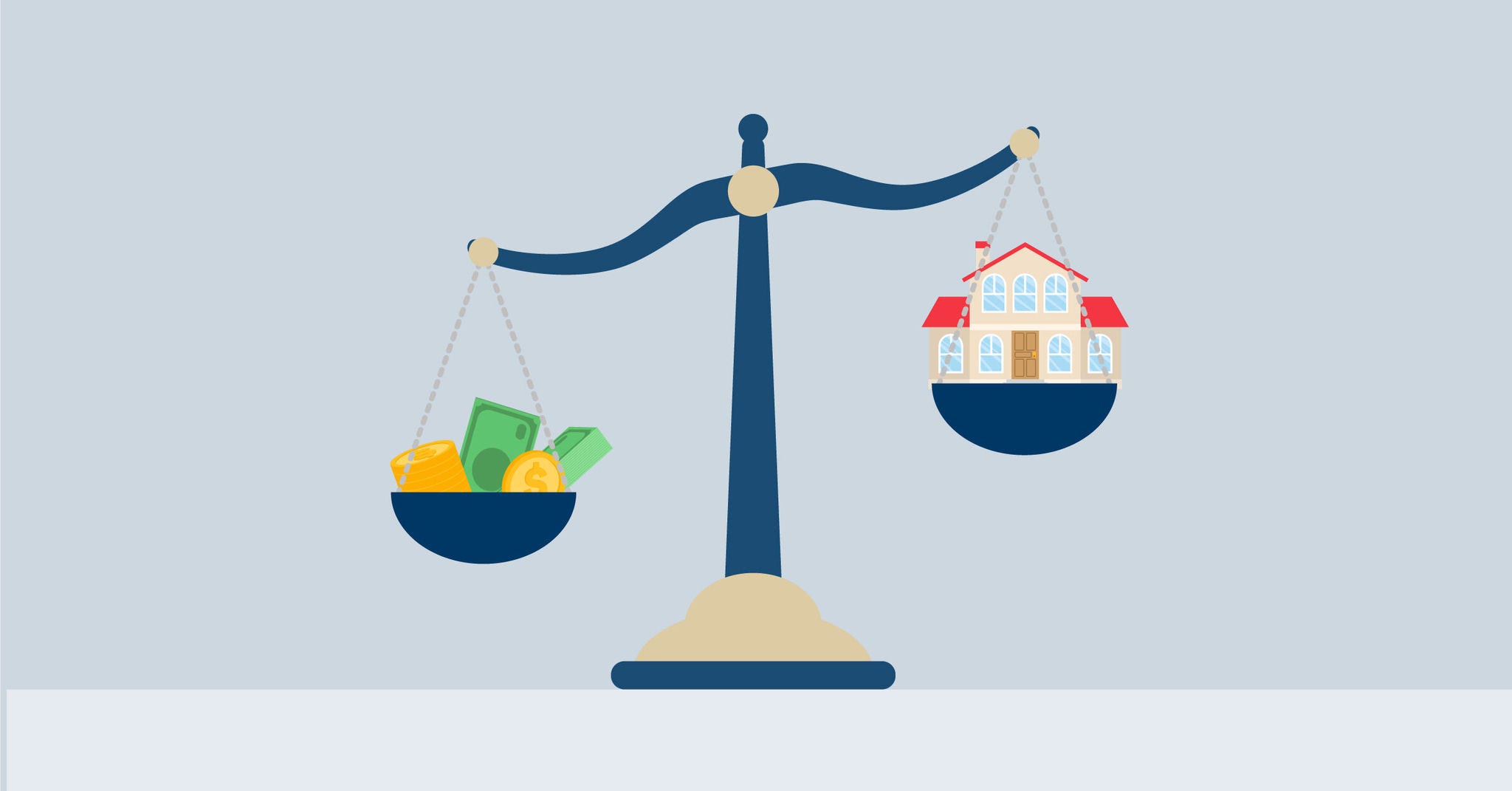
If you’re a homeowner, a home equity loan might seem like the most effective way to access funds to consolidate debt, fund a home renovation, or cover unexpected expenses.
A home equity loan can turn part of your home's value into a lump sum, but the decision also puts your property behind the debt. And while they can be an affordable borrowing option because APRs tend to be lower than other financing methods, there are some drawbacks to consider.
In this article, you’ll learn how home equity loans work, their potential benefits and risks, what the 2027 rate environment could mean for borrowers, and how alternative financing options compare.
What is a home equity loan?
A home equity loan lets you borrow against a portion of the equity you have built in your home. Equity is the difference between your home’s current value and the amount you still owe on your mortgage. If approved, you receive the funds as a lump sum and repay the balance in fixed monthly installments over a set term.
Because the loan is secured by your home, lenders may offer a lower interest rate than they would for an unsecured loan. However, if you cannot repay the loan, the lender may be able to pursue foreclosure. You’ll also need significant equity to borrow larger amounts of money, and qualifying for the loan requires an appraisal, in addition to income verification and a credit check.
A home equity loan may be a good fit for a homeowner who has substantial equity and can comfortably manage an additional fixed payment. It may be less suitable if you need funds quickly, expect to sell soon, want to avoid closing costs, or prefer not to use your home as collateral.
Borrow more without collateral
Explore unsecured personal loan options up to $250K†
† Terms subject to credit approval upon completion of an application. Loan sizes, interest rates, and loan terms vary based on the applicant's credit profile. Not all applicants will qualify for the lowest rate.
What to consider before getting a home equity loan
A home equity loan can provide access to a large lump sum of money with predictable payments, but those advantages come with costs and collateral risk. Before you borrow, consider the full cost of the loan, its effect on your monthly budget, and how using your home equity may affect future financial decisions.
Benefits of a home equity loan
The following benefits may make it an appealing option for financing a defined expense.
- Fixed monthly payments: Home equity loans typically have fixed interest rates, so your payment stays consistent throughout the loan term. This makes it easier to plan your budget and understand how the loan will affect your cash flow.
- Potentially competitive rates: Securing the loan with your home may help you qualify for a lower rate than some unsecured financing options. However, the interest rate is just one component of the full cost, so compare APRs and fees before choosing a loan.
- Access to a lump sum: You receive the approved amount upfront and repay it over a set period, which can work well when you know how much you need for a specific purpose, such as a planned home improvement or consolidating existing debt.
- Larger borrowing capacity: Homeowners with substantial equity may qualify for more than they could through some other types of financing. Your available loan amount will generally depend on your home’s value, your remaining mortgage balance, and the lender’s requirements.
- Longer repayment terms: Some home equity loans allow borrowers to spread repayment over 10, 15, or 30 years, which may reduce the required monthly payment. A longer term can also increase the amount of interest paid over time, so review both the monthly payment and total repayment cost.
Risks of a home equity loan
A home equity loan creates another long-term payment tied directly to your property. Consider whether the potential rate and borrowing advantages justify the following costs, limitations, and risks.
- Your home secures the debt: A home equity loan uses your property as collateral, which gives the lender a legal claim against it. If you cannot make the required payments, you could face foreclosure and lose your home.
- Added fees increase the price: In most cases, you’ll owe origination fees, appraisal fees, and other closing costs to take out a home equity loan, similar to a mortgage. Closing costs vary by lender, but fees typically range from 2% to 5% of your loan amount. On a loan worth $100,000 or more, these expenses could add thousands of dollars to your borrowing costs.
- Your borrowing power depends on your equity: Borrowing is usually limited to 80% to 85% of your equity, so if you need access to six-figure financing, you’ll need to have amassed a substantial amount of equity to get the funds.
- Using equity reduces your financial cushion: Borrowing against your home reduces the equity available if you later sell, refinance, or need funds for another purpose. This could limit your flexibility if your housing plans or financial priorities change.
- Approval and funding can take weeks: The application process may include income verification, a home appraisal, title work, and a formal closing. Those additional steps may make a home equity loan less suitable when you need funds quickly.
- Selling your home may complicate repayment: A home equity loan generally must be paid off when you sell the property. The remaining balance can reduce the proceeds you receive from the sale and may affect how much equity is available for your next home.
As with all financial products, home equity loans and HELOCs come with their own set of benefits and drawbacks that you should explore before you make a multi-year commitment.
Home equity loan risks in 2027
Homeowners entered the second half of 2026 with record levels of tappable equity, per a recent ICE Mortgage Monitor report. Still, the average homeowner can only access about $212,000 with equity-based financing. Well-qualified borrowers may be able to get more with select personal loan providers. For example, BHG Financial offers unsecured personal loans up to $250,000.1
As recession fears rise, nearly three in 10 homeowners are eying home equity loans, according to a recent survey by MeridanLink. At the same time, 54% of homeowners are hesitant to tap their equity, citing worries about high interest rates and the risk of jeopardizing homeownership—especially now that the Federal Reserve raised the federal funds rate in September 2026. The 2027 rate outlook remains uncertain, creating risk for new borrowers.
When the Fed adjusts rates, it indirectly influences the prime rate, which most banks use to establish borrowing costs for consumers. The prime rate typically sits three percentage points above the federal funds rate and moves with it.
Home equity loans typically have fixed rates, so an existing loan’s rate generally will not change when the Federal Reserve adjusts its target rate. New loan offers can still move as lenders respond to changes in benchmark rates, funding costs, inflation expectations, and borrower demand.
Home equity loan vs. personal loan through BHG Financial
Here’s a quick glance at how a home equity loan compares to a personal loan through BHG Financial:
|
|
Home equity loan |
BHG personal loan |
|---|---|---|
|
Collateral |
Home used as collateral |
No collateral and no foreclosure risk |
|
Interest rates |
Variable, but rising (now around 9%+) |
Fixed |
|
Apporval time & fees |
Weeks-long process, 2%–5% closing costs |
Fast approval decision (as little as 24 hours2), minimal fees |
|
Loan amount & terms |
Large amounts, long terms (up to 30 years) |
Up to $250,0001, terms up to 10 years1,3 |
|
Flexibility & simplicity |
Complex paperwork, adjustable rates |
Simple, fixed payments and predictable |
Source: Investopedia
Why high earners should consider a personal loan instead of a home equity loan
Even though the lower initial interest rate might seem like a no-brainer for high earners with competing priorities or limited cash flow, it can be just as important to preserve home equity and maintain liquidity in an elevated rate environment.
It allows you to preserve liquidity with predictable payments
Even high earners face cash flow restraints. A home equity loan can make sense for a defined expense, but the mortgage-style process may be more involved than you need. If you know how much you need, and have a defined plan for the funds, a fixed-rate personal loan can offer a lump sum and predictable payments without using your property as collateral.
Compare the full repayment picture, including APR, fees, term, monthly payment, and total interest. The best fit is the option that supports the goal while keeping the payment comfortable alongside your other commitments.
You can access larger loan amounts without risking your home
High earners face the same collateral risk as every other borrower. Keeping your home outside the loan can preserve equity for a future sale, another property decision, or an unexpected need. An unsecured personal loan may provide capital without adding another lien to your home.
It's easier to move on time-sensitive priorities
Getting a home equity loan can take some time—at least a few weeks to review your application, conduct a home appraisal, and disburse the funds. If you plan to use your loan for more immediate needs, this prolonged process, plus the fees involved, may limit your financial agility.
They're ideal for debt consolidation
Juggling multiple credit cards, personal loans, or other balances can make it harder to track due dates, forecast monthly expenses, and make any progress toward financial goals.
A personal debt consolidation loan combines eligible balances into a single fixed monthly payment, creating a more predictable repayment schedule. In many cases, borrowers also qualify for a lower interest rate than they're currently paying on high-interest credit cards, helping reduce borrowing costs over time.
When you pay off high-rate debt, it helps free up cash flow and may improve your credit profile. Your credit score can influence not only home equity loan offers, but also mortgage rates and other future financing options.
Why a personal loan through BHG Financial is a better option compared to home equity loans
Choosing how to finance your next move shouldn't mean putting your home on the line. You already understand the risks that come with home equity loans: your house is collateral, closing costs and appraisal fees add up fast, and the approval process can drag on for weeks while your plans sit on hold. For high earners with multiple financial priorities, that uncertainty and exposure often isn't worth it.
A personal loan through BHG Financial is an alternative. Through BHG Financial, you can borrow up to $250,0001 with no personal collateral required, so your home stays entirely out of the equation. Terms through BHG Financial extend up to 10 years1,3, which means you get a fixed monthly payment that fits your budget instead of a variable rate that can shift with the market. We underwrite based on your full financial picture, not just a credit score, so we can say yes to qualified borrowers that traditional lenders can overlook.
Where home equity loans can take a month or more to close, BHG Financial delivers an approval decision in as little as 24 hours2 and funds your loan in as few as five days.2 You can check your rate and estimate your monthly payment in seconds, with no impact to your credit score4 and no application fees. There are no prepayment penalties with BHG Financial, so if your circumstances change, you can pay down your loan faster without being penalized.
When you're ready to compare your options side by side, prequalify with BHG Financial and see your personalized rate in minutes,2 with zero obligation and zero impact to your credit.4
Skip the home appraisal
Access personal loans up to $250K† without collateral
† Terms subject to credit approval upon completion of an application. Loan sizes, interest rates, and loan terms vary based on the applicant's credit profile. Not all applicants will qualify for the lowest rate.
Frequently Asked Questions (FAQs)
What is a better option than a home equity loan?
An unsecured personal loan can be a strong alternative to a home equity loan when you want a lump sum and predictable payments without using your home as collateral. A cash-out refinance may be worth comparing if current mortgage rates are lower than your existing rate, while savings may be appropriate for a smaller expense that will not deplete your emergency fund or liquid reserves.
What are the downsides of taking home equity out of my home?
The main downsides are putting your home at risk, paying closing and appraisal costs, reducing the equity available for future needs, and taking on another long-term payment. A home equity loan can also take longer to close than some unsecured options. Compare the total cost and the effect on your future flexibility, not only the interest rate.
Is it smart to take out a home equity loan right now?
It may be reasonable if you have substantial equity, a defined use for the funds, a comfortable repayment plan, and enough savings to handle a disruption in your income or an unplanned expense. And while the recent benchmark rate increase will make borrowing more expensive, current and forecasted rates are only part of the decision. Review current equity-based offers against other unsecured offers and consider whether the potential rate savings justify the fees and the risk of securing the debt with your home.
Not all solutions, loan amounts, rates or terms are available in all states.
1 Terms subject to credit approval upon completion of an application. Loan sizes, interest rates, and loan terms vary based on the applicant's credit profile. Not all applicants will qualify for the lowest rate.
2 This is not a guaranteed offer of credit and is subject to credit approval.
3 Personal Loan Repayment Example: A $60,000 personal loan with a 7-year term and an APR of 17.06% would require 84 monthly payments of $1,191.38.
4 There is no impact on your credit for applying. For personal loans, a complete credit history, which will appear as an inquiry on your credit report, will be performed upon acceptance and funding of the loan and may impact your credit.
Consumer loans funded by Pinnacle Bank, a Tennessee bank, or County Bank. Equal Housing Lenders. 
No application fees, commitment, or impact on personal credit to estimate your payment.
For California Residents: Personal loans made or arranged pursuant to a California Financing Law license - Number 603G493.

Bankers Healthcare Group, LLC d/b/a BHG Financial NMLS ID# 2040829