
Personal loans
Customized financing to consolidate high-interest debt and unlock financial flexibility.
WAYS TO USE YOUR LOAN
Resources
Guides, insights, and research – explore our latest articles.
About BHG
Programs
Is a Garage Conversion Worth It? Estimate Costs and Financing
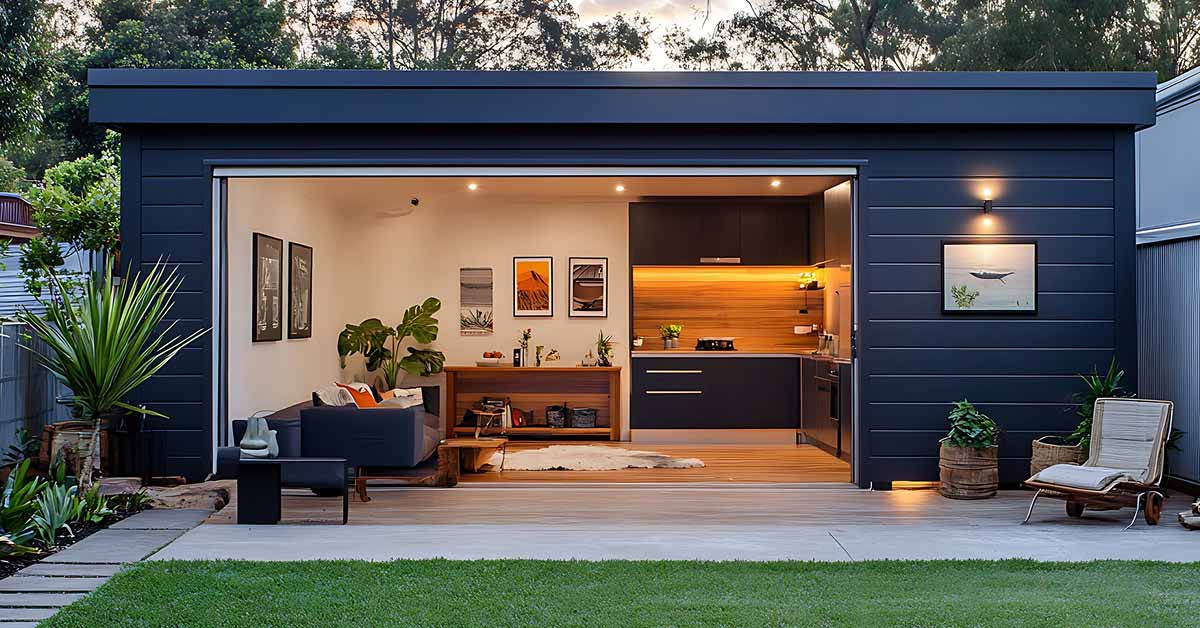
If you need more living space, a garage conversion can be one of the more affordable ways to get it. Depending on the scope, it may cost far less than building an addition or moving. It can also create space that works harder for your household, whether that means a home office, guest suite, gym, or even a rental unit.
That said, the value of a garage conversion depends on what you build, what your local market expects, and whether the work is fully permitted. In some neighborhoods, losing covered parking can limit resale appeal. In others, a finished bedroom, in-law suite, or ADU can make the property more attractive.
Demand for ADUs has grown steadily in recent years, and many homeowners see them as a way to strengthen their financial position and support family needs. Freddie Mac research shows ADU listings grew at an average rate of 8.6% annually between 2009 and 2019. In a more recent survey, 32% of homeowners said they would consider adding an ADU once they understood the concept—often to create rental income or house family members.
Before you pull permits, it helps to understand garage conversion costs by scope, permitting requirements, appraisal considerations, and how to finance the project without putting too much pressure on your monthly budget.
Whether you're weighing home renovation financing options or still running numbers on ROI, this guide gives you the information you need to make the right decision for you and your financial goals.
Key TAKEAWAY
A garage conversion can be worth it if it adds useful living space, supports long-term household needs, or creates rental income. Costs and value depend heavily on scope, permits, finish quality, and local parking demand. If speed and predictable payments matter for funding the project—and you'd rather not use your home as collateral—an unsecured personal loan through BHG Financial is worth comparing to other funding options.
Is a garage conversion worth it?
Converting your garage can be worth it if you need livable square footage or rental income and go in with realistic expectations.
Whether it pays off depends on a few factors, including:
- Scope, including the type of conversion and square footage
- Location and neighborhood buyer expectations
- Permit requirements in your jurisdiction
- Finish quality
- How much covered parking matters in your market
Cost is the first variable to determine. A simple garage conversion runs $6,007 to $27,671 nationally, with an average cost of $16,623, according to Angi.
Turning your garage into a full accessory dwelling unit (ADU)—a self-contained living space with its own kitchen and bathroom—is a much bigger project, averaging about $110,000.
Returns tend to be strongest when the conversion is fully permitted and well finished. Projects that add a bedroom, bathroom, or rentable unit are also desirable, driven in part by multigenerational living trends. According to the National Association of Realtors, 14% of homebuyers purchased a home for multigenerational living in 2024, increasing the appeal of properties with separate living spaces like ADUs.
Done well, garage conversions have an ROI of about 80%, according to Angi. Returns weaken when buyers in your neighborhood prize covered parking, or when the work goes unpermitted, which can complicate both resale and appraisals.
How you finance the project matters more than you might realize. Personal loans offer fixed payments and no collateral requirement, which keeps your home out of the equation.
Home equity products may have lower rates, but they put your property on the line, a trade-off to weigh carefully before you commit.
Borrow more without collateral
Explore unsecured personal loan options up to $250K†
† Terms subject to credit approval upon completion of an application. Loan sizes, interest rates, and loan terms vary based on the applicant's credit profile. Not all applicants will qualify for the lowest rate.
How much does a garage conversion cost?
Garage conversion ranges from $6,007 to $27,671, depending on square footage, materials, finishes, labor, and more. Simple room conversions cost far less than full ADUs with kitchens and baths.
Typical scopes and cost ranges
A simple garage conversion, such as turning your garage into an office, bedroom, or gym without adding plumbing, is usually the most budget-friendly path. These projects cost between $6,007 and $27,671, with an average of $16,623.
The exact amount you'll pay depends on what you build.
Here are the rough costs, according to Angi’s garage conversion cost guide:
- Home office: $5,000
- Home gym: $6,000
- Utility room: $6,000
- Entertainment room: $7,500
- Bedroom: $12,000–$25,000
Don't need to convert the full space? Partial conversions, where you keep a storage bay or a tandem parking spot, allow you to trim costs. You give up some usable square footage but retain covered parking, which many buyers value.
Your location also significantly affects project cost. A typical garage conversion costs about $14,531 in Texas and $19,546 in New York, according to Angi’s state-level data.
A full ADU with its own kitchen and bathroom is the most complex and costly scope. These average about $110,000 nationally, ranging from $25,000 for a budget single-car conversion to $225,000 for a larger detached build.
What determines the cost of your project?
Various factors determine the cost of your garage conversion. Hiring a general contractor typically accounts for 50% to 60% of your total project costs, according to Angi.
But several additional factors can move your budget significantly in either direction:
- Structural fixes: Slab leveling, framing in the old garage-door opening, and foundation repairs add up fast if the existing structure needs work. Foundation repairs alone can add $2,000–$8,000+ to your total costs.
- Insulation and fire separation: Bringing the space up to code means proper insulation and, where an attached garage remains, fire-rated separation between it and the living area.
- Egress and ceiling height: Bedrooms have to meet code minimums, generally a 7-foot ceiling and an egress window for emergency escape.
- Electrical and plumbing: Expect roughly $1,000–$3,000 for electrical and $1,500–$4,000 for plumbing, according to Angi. Major sewer, septic, or trenching work can increase plumbing costs further.
- Permits and contingency: Garage conversion permits typically run $300–$1,000, according to Angi. Fees vary by jurisdiction, so build in a contingency cushion for surprises.
Will a garage conversion add value to my home?
A permitted, well-finished conversion can boost your home's value, especially when it adds a bedroom or rentable unit. But how much it adds depends heavily on your location and your local market.
How appraisers treat conversions
Appraisers typically look at comparable sales, replacement cost, and, in some cases, rental income potential. If nearby homes have similar ADUs or converted living space, it is easier for the appraiser to recognize that value.
Permitted space typically counts toward your home's gross living area (GLA) in an appraisal. Unpermitted space usually doesn't, and it may be listed separately or left off the MLS entirely, which directly affects how your home is valued and financed.
Keep a file with key documentation, including a certificate of occupancy (CO) or final inspection sign-off, which qualifies the new space as GLA. Building permits, plans, contractor invoices, and rental agreements are also important to have handy. If you sell or refinance later, that paperwork can make the process much smoother.
How your market can determine ROI
Urban markets with tight housing tend to reward ADUs and in-law suites more than suburban markets, where buyers often budget for storage and covered parking.
In the right location, an ADU does more than add resale value: it can generate monthly income. Your ROI can top 100% over time when the space is rented, according to Angi, but buyer preferences vary from one neighborhood to the next.
Proximity to transit strengthens rental demand for ADUs, and neighborhood comparables also matter. If nearby homes don't have similar living configurations, appraisers have fewer comps to draw on, which can compress value recognition. Finish quality and the addition of a bedroom or bathroom tend to drive the biggest gains.
How to finance a garage conversion
The right financing for a garage conversion project comes down to your priorities. Consider how quickly you need the money, whether you're comfortable putting your home up as collateral, and how predictable you want your monthly payment to be.
Here's how the main options stack up.
Unsecured personal loan
An unsecured large personal loan is the best fit when you want fast funding, fixed monthly payments, no collateral, and flexibility on how you use the funds. That may be especially appealing for a garage conversion, where contractor deposits, permits, and material costs often need to be covered up front.
Personal loans through BHG Financial offer:
- Loan amounts up to $250,0001 with no personal collateral required
- Long loan terms from 2–10 years1,2
- Approval decisions in as little as 24 hours3
- No credit impact to view your options4
- No application fee and no prepayment penalty
- The option to add a co-borrower at the start of or during the application process
If you'd rather keep your equity intact and move quickly, an unsecured personal loan through BHG Financial is worth considering before borrowing against your house.
Fortune’s top pick for large loans
Explore unsecured personal loan options up to $250K†
† Terms subject to credit approval upon completion of an application. Loan sizes, interest rates, and loan terms vary based on the applicant's credit profile. Not all applicants will qualify for the lowest rate.
HELOC or home equity loan
A HELOC or home equity loan may carry lower rates than an unsecured personal loan. And if the funds are used to substantially improve the home that secures the loan, the interest may even be tax-deductible in certain situations.
The trade-off is that both products use your home as collateral. HELOCs also carry variable-rate exposure, so payments can change over time. Underwriting typically takes weeks to months, and may include appraisal and closing costs. If you miss payments, your home is at risk.
Before moving forward with home equity financing, compare personal loans to HELOCs to determine which option is best for you.
Cash-out refinance and contractor financing
A cash-out refinance consolidates your renovation cost into a new, larger mortgage, which can make sense if you're refinancing out of a meaningfully higher rate.
However, closing costs typically run 2% to 6% of the loan amount, and you're resetting your mortgage term in the process.
Contractor financing can be convenient, though terms vary widely. Promotional offers may expire quickly, so it is important to understand the long-term repayment terms before signing.
Why get a loan through BHG Financial
A garage conversion can increase your home's usable space and add value, but only if your financing doesn’t hurt your return. Put a $40,000 project on a high-interest credit card or a short-term loan, and you can end up paying far more than you planned. BHG Financial offers an alternative.
BHG Financial offers access to unsecured personal loans and home improvement loans up to $250,0001 with no collateral required, so your project moves forward without putting your home on the line. Fixed rates and terms up to 10 years1,2 can help keep payments more manageable and predictable.
The process is designed to move quickly, too. You can check your rate in seconds3 with a soft credit pull that does not affect your score.4 If you proceed, approval decisions can arrive in as little as 24 hours3, and funds can be deposited in as few as five days.3
Ready to turn your garage into a rental unit, a home office, or more living space for the family? Explore your options through BHG Financial.
Frequently asked questions (FAQs)
Is a garage conversion worth it?
A garage conversion can be worth it if you need livable square footage or rental income and plan to stay in the home for five or more years. ROI is strongest when the project is fully permitted, well-finished, and adds a bedroom, bathroom, or rentable unit in a market with strong demand.
How much does a garage conversion cost?
Garage conversion costs vary by scope, materials, and location. A simple conversion typically costs $16,623, while an ADU costs $110,000, according to Angi. You’ll pay around $150 per square foot for budget materials while luxury options, such as marble countertops and hardwood floors, will set you back $400 per square foot.
A detached garage also runs 20% to 30% more than an attached one, since utility lines have to be extended to reach it.
Is it cheaper to convert a garage or build an addition?
Converting a garage is generally cheaper than building from scratch, since it reuses the existing structure, foundation, and roof. For perspective, Angi puts a garage-to-ADU conversion around $110,000 versus about $180,000 to build a new ADU.
Will a garage conversion increase my home value?
A fully permitted, high-quality conversion that adds a bedroom, bathroom, or rentable unit can add value. However, your ROI also depends heavily on the market.
In neighborhoods where buyers prize covered parking, a conversion may reduce appeal, and unpermitted work typically cannot be counted toward gross living area by appraisers, which will limit its value.
See your offer † real fast
Just a few easy steps to get prequalified!
† This is not a guaranteed offer of credit and is subject to credit approval.
Advertised rates are subject to change without notice.
Not all solutions, loan amounts, rates or terms are available in all states.
1 Terms subject to credit approval upon completion of an application. Loan sizes, interest rates, and loan terms vary based on the applicant's credit profile. Not all applicants will qualify for the lowest rate.
2 Personal Loan Repayment Example: A $60,000 personal loan with a 7-year term and an APR of 17.06% would require 84 monthly payments of $1,191.38.
3 This is not a guaranteed offer of credit and is subject to credit approval.
4 There is no impact on your credit for applying. For personal loans, a complete credit history, which will appear as an inquiry on your credit report, will be performed upon acceptance and funding of the loan and may impact your credit.
No application fees, commitment, or impact on personal credit to estimate your payment.
Consumer loans funded by Pinnacle Bank, a Tennessee bank, or County Bank. Equal Housing Lenders. 
For California Residents: Personal loans made or arranged pursuant to a California Financing Law license - Number 603G493.

Bankers Healthcare Group, LLC d/b/a BHG Financial NMLS ID# 2040829